~~~
History
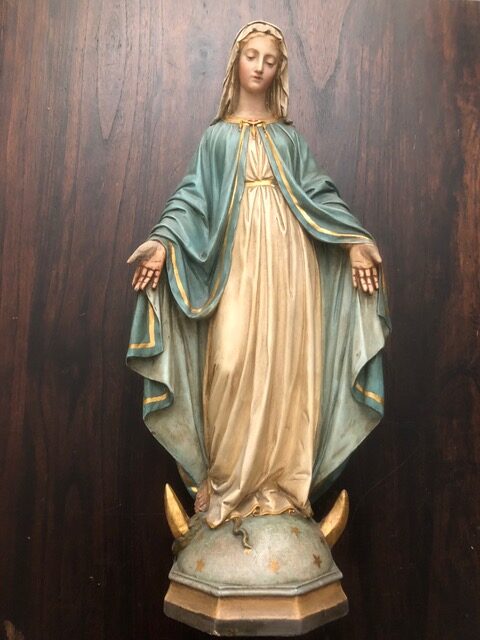
There is a legend at the pilgrimage site of Our Lady of Ptujska Gora. The story goes that people were living in a very turbulent time, and the Islamic Turks wanted to destroy the church. Mary enveloped the church and its immediate surroundings in a dark cloud, making the church invisible to the Turks. The village was then named Crna Gora (Black Mountain). In the first half of the 15th century, during the time of the initial Turkish threats, the church was fortified. The church was founded by Bernhard III (1379-1421), Count of Pettau (Ptuj), and his wife Countess Williburg/Willibirg/Walburga/Walburgis von Maidburg (1386-1431), likely after making a vow. This happened at “Neystift/Neustift,” where the basilica now stands. The construction of the church began around 1398 and was largely completed by 1420. The altars were gifts from noblemen.
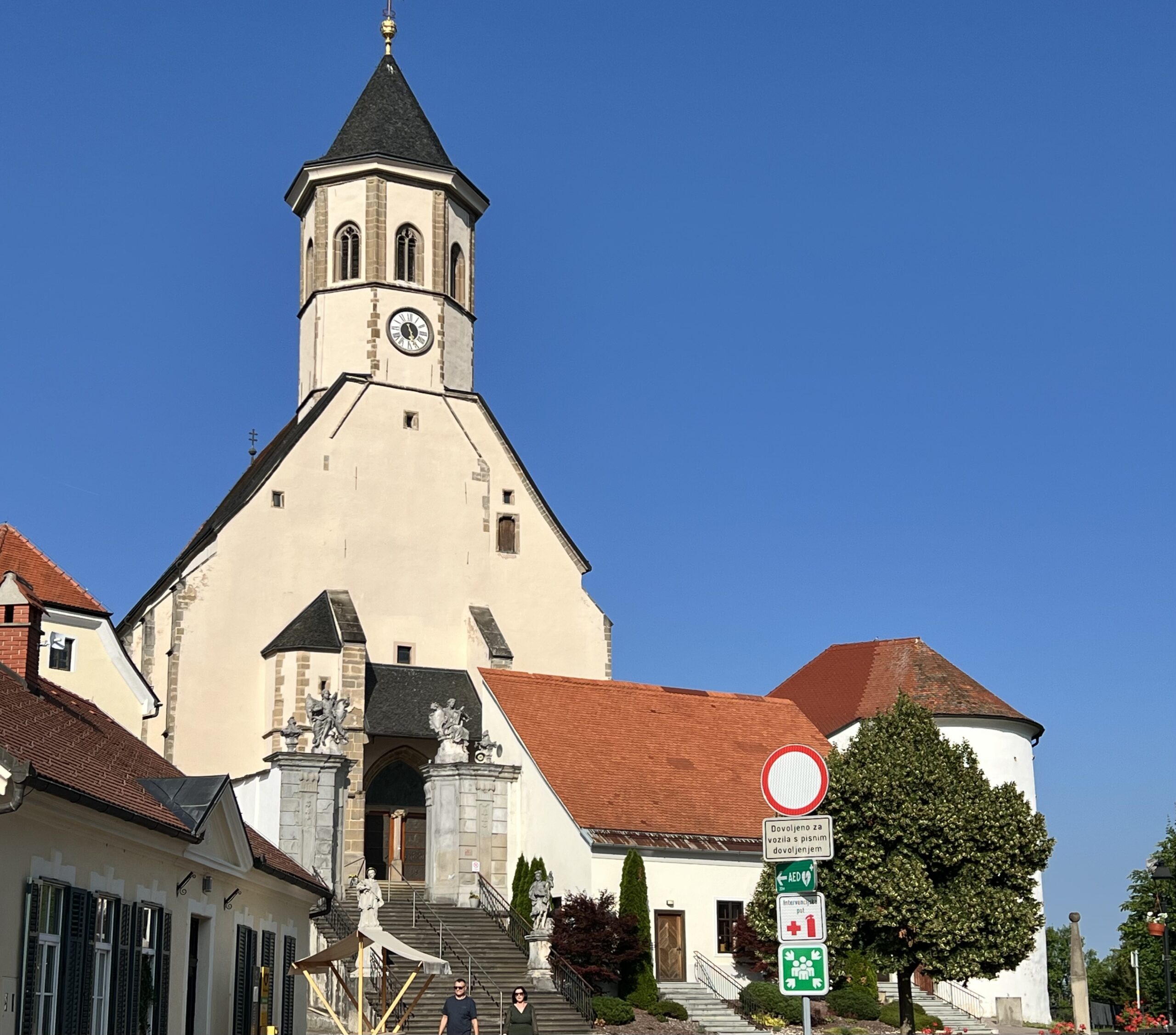
In 1471, the Turks again attacked the area, destroying a lot around Ptujska Gora. Around 1473, the mountain is referred to as Mons Gratiarum (Mount of Grace). From this name, it can be inferred that it was already a place of pilgrimage at that time, where people received protection from Mary.
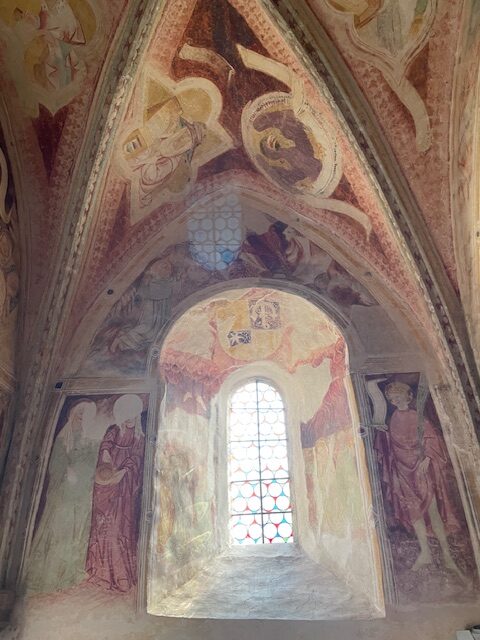
The Jesuits organised the pilgrimages for decades and continued to do so until 1773 when the Jesuit order was dissolved by the anti-Catholic government. This situation changed at the beginning of the 19th century.
In 1927, the current name Ptujska Gora is first used. In 1937, Franciscan friars come to manage the pilgrimage church.
Major restoration works took place in the second half of the 20th century and were completed in 1980. The church received new stained-glass windows, with designs provided by Ida Brisnik Remec (1941).
In 1989, Viktor Gojkovic (1945) created the Stations of the Cross in the church. He also made reliefs of the symbols of the four evangelists in 2002, which were made against the vaults of the former Chapel of the Cross. For the evangelist Matthew, the characteristic is the angel/human, for Mark it is the lion, Luke is associated with the ox/bull, and for John the symbol is the eagle.
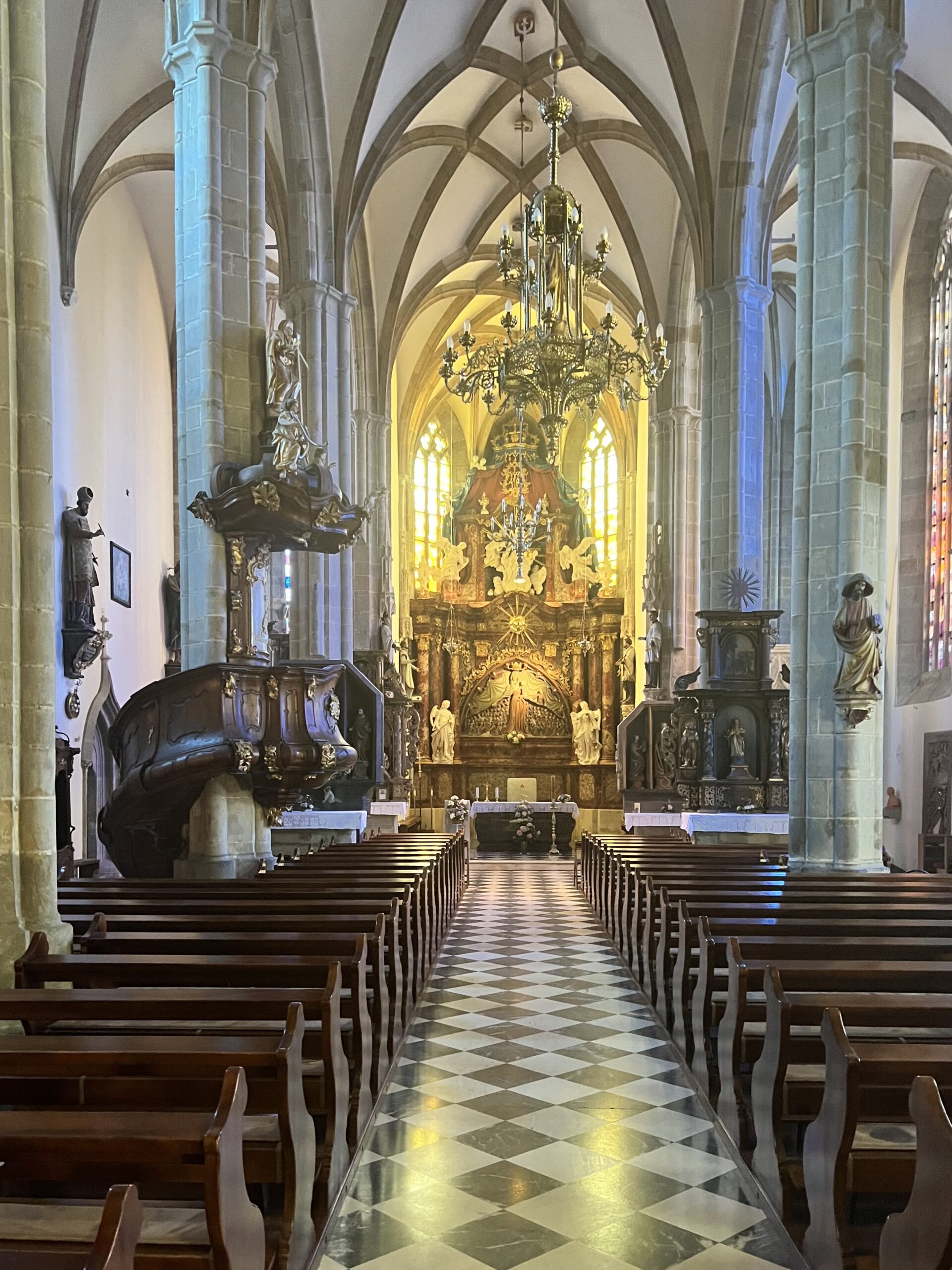
In 2010, the church was elevated to the status of a basilica by Benedict XVI, Pope from 2005-2013, born Joseph Aloysius Ratzinger (1927-2022).
Pilgrimage site
Ptujska Gora (Ptuj Mountain) is a village with a well-known pilgrimage site of Our Lady, situated 352 metres above sea level. The village is home to around 400 people.
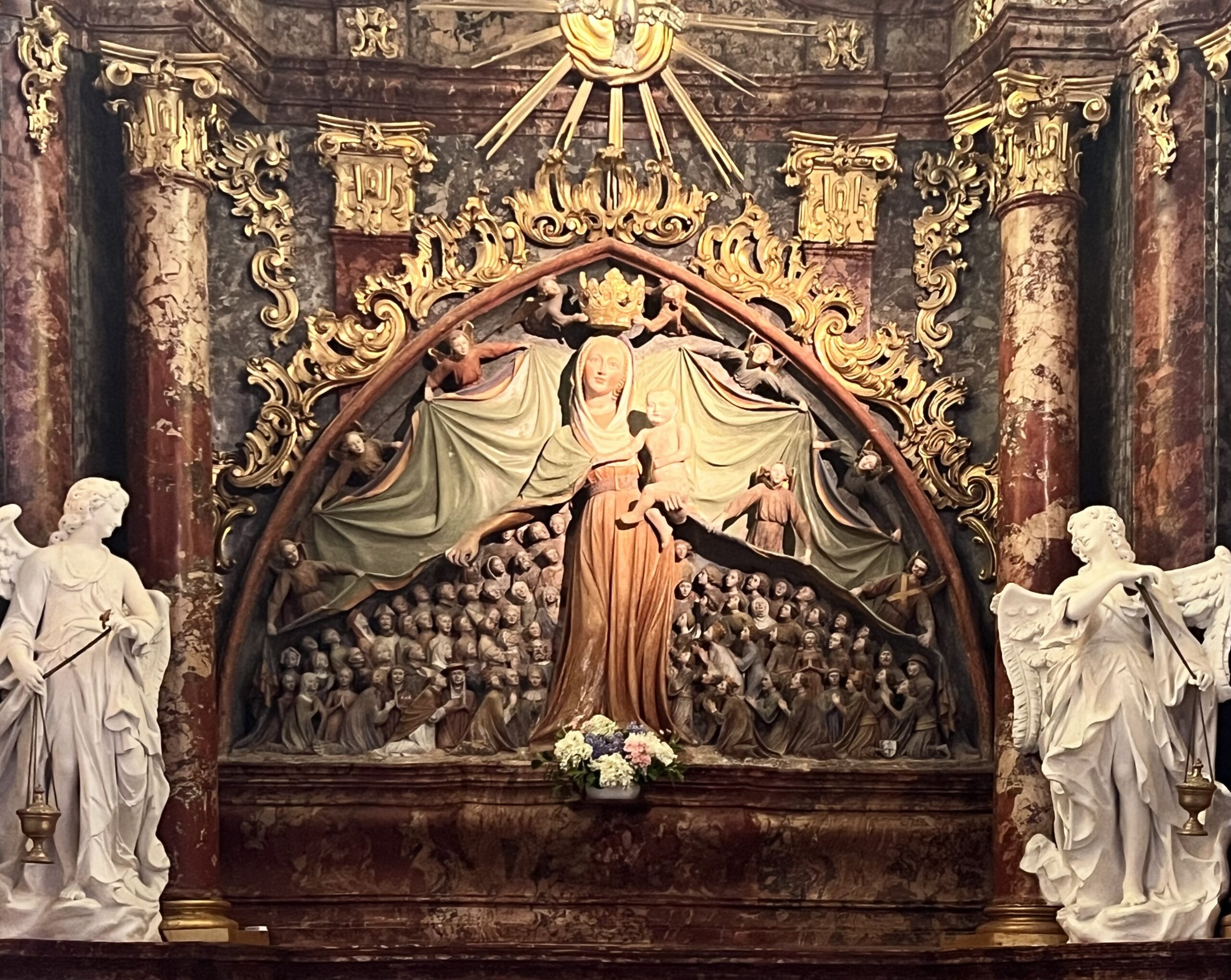
The pilgrimage site is home to a well-attended pilgrimage church. The 14th-century Gothic church bears the name “Basilika Marije Zavetnie s plascem” (Basilica of Our Lady of Protection with a mantle).
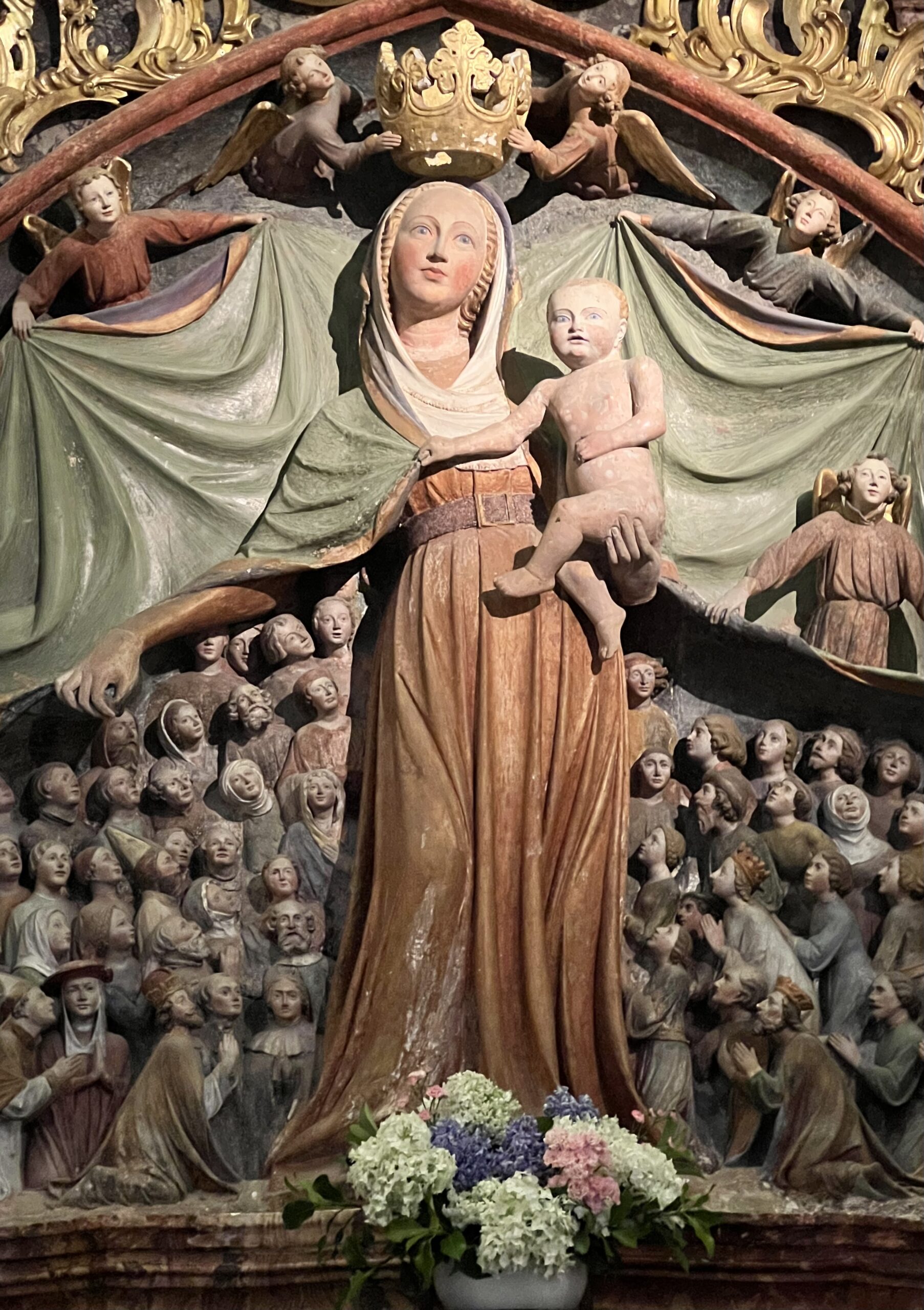
On the Baroque high altar, dating from around 1760, is the Gothic relief of mercy of Mary with the large, green protective cloak, from around 1410, and angels holding up the cloak. Beneath this large piece of clothing, 82 figures are depicted that are of historical importance, such as aristocrats, clergy, burghers, and the nobles Bernard III and his wife Walburga/Walburgis.
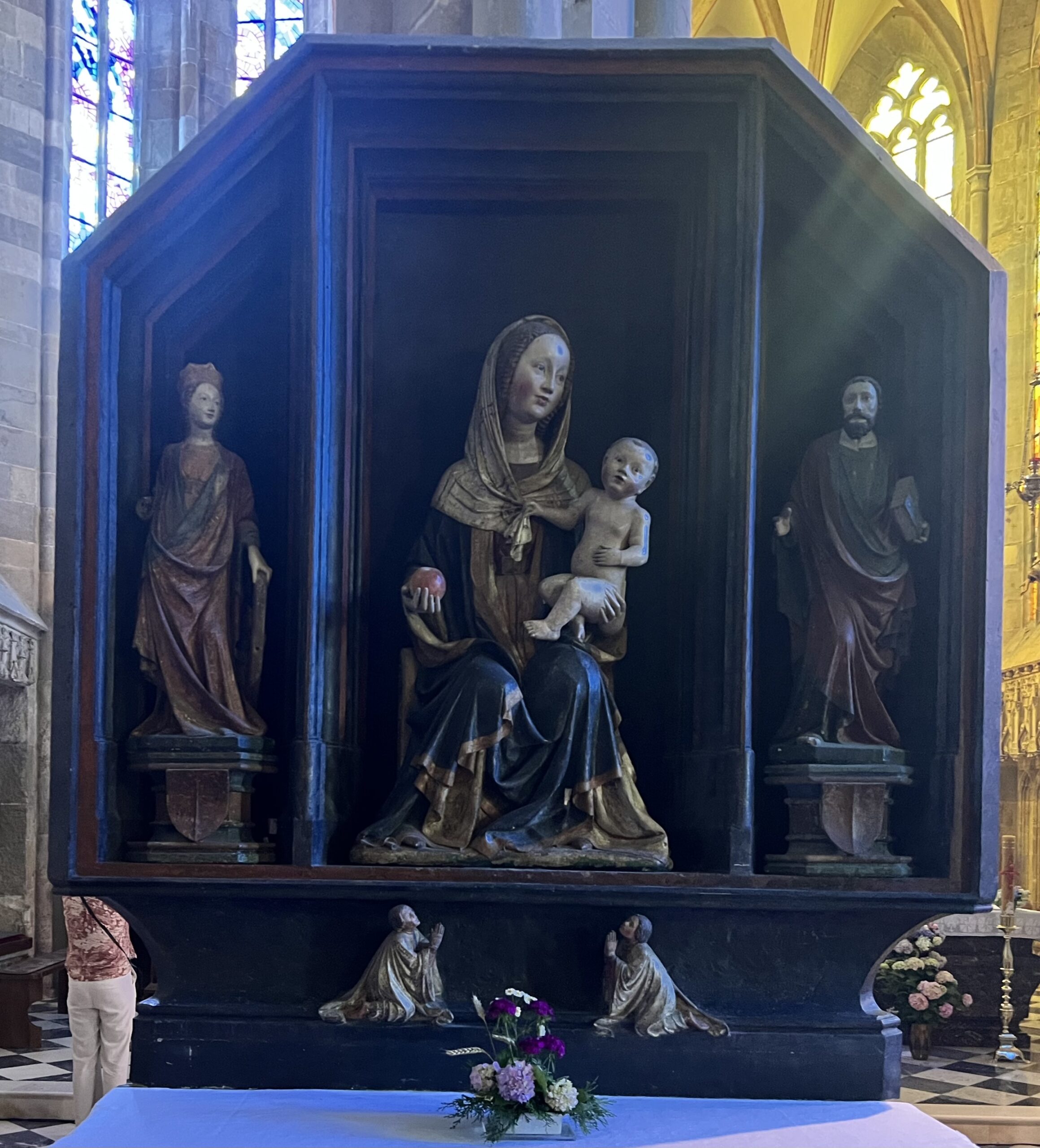
The basilica also houses a rosary altar with the seated Virgin Mary and Child. Our Lady holds a sceptre in her right hand. To her sides stand Saint Catherine and Saint Andrew. The sculptures date from the early 15th century. Beneath the figures kneel the church's donors with closed, praying hands and their gaze fixed on Mary.
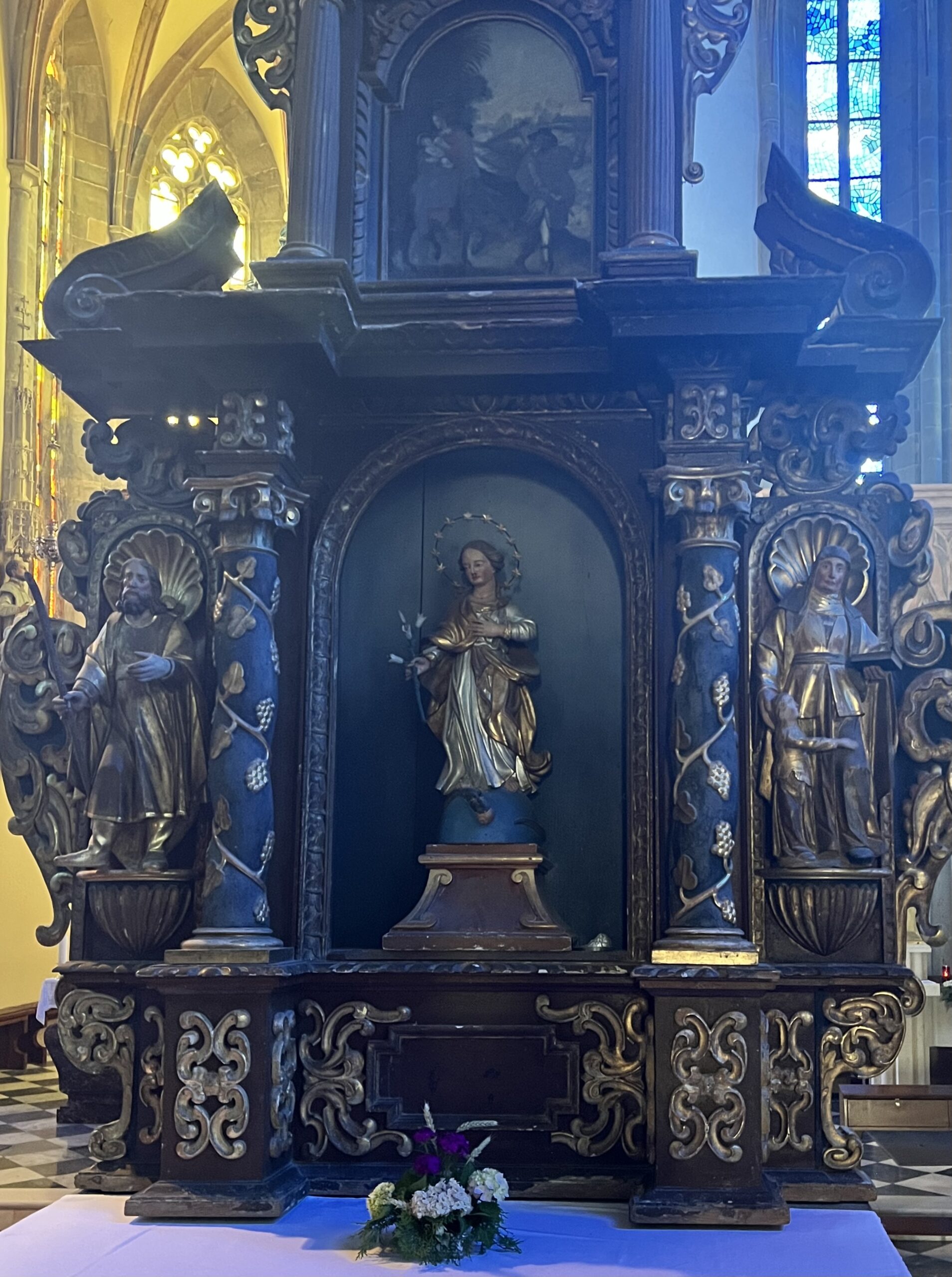
Other altars include those dedicated to Loreto (17th century), the Holy Family (18th century) and the Immaculate Conception, with Mary in the centre and her parents, Anne and Joachim, in the side chapels. Above is a fresco of the Flight into Egypt.
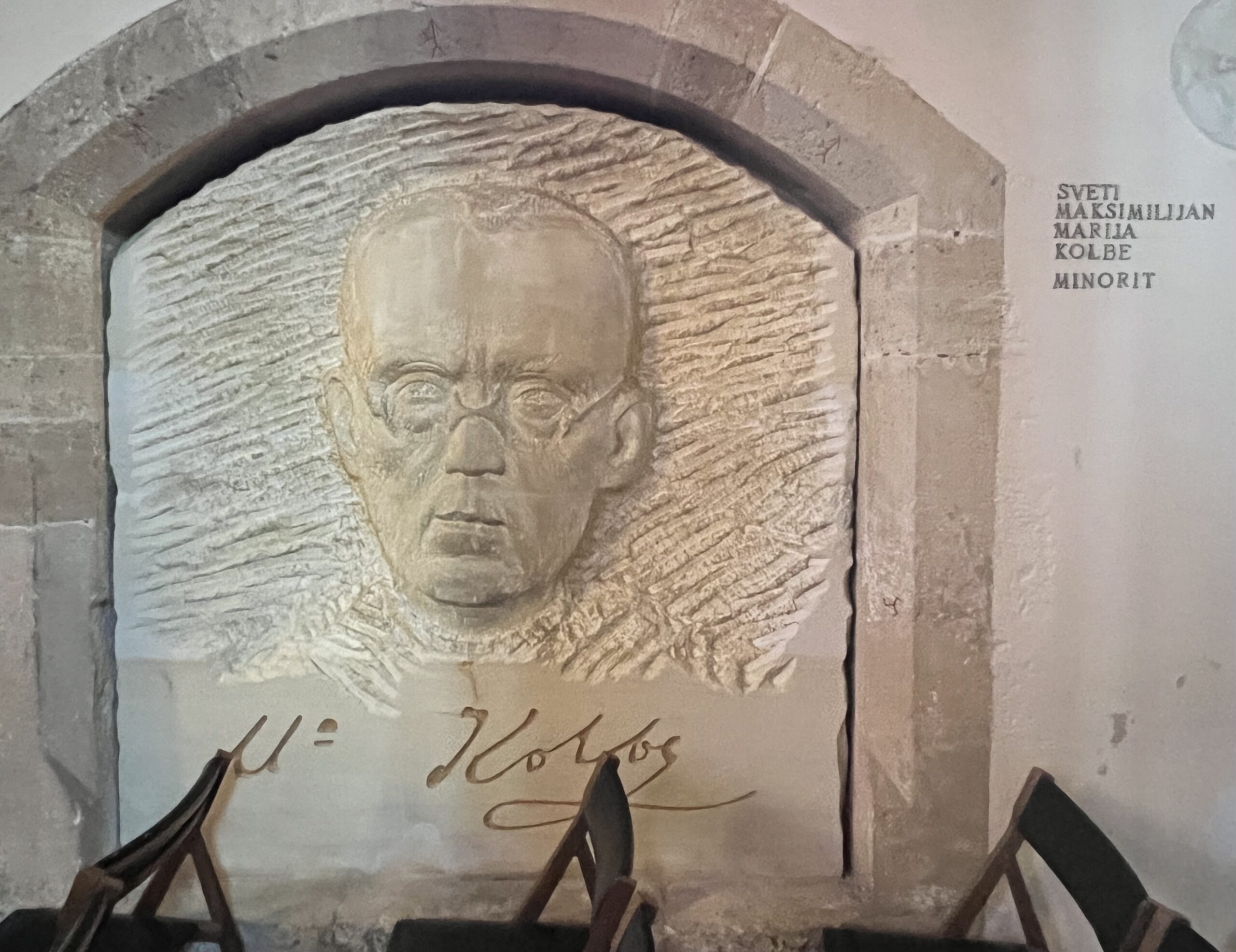
Attention is also paid to Maximilian Kolbe (Rajmund Kolbe, 1894-1941). A large relief depicting him has been placed against the side wall. Kolbe was a Polish priest, engaged in journalistic resistance activities, was captured, sent to the Nazi concentration camp Auschwitz, and died there.
The 18th-century Baroque pulpit is a testament to superior wood carving. The basilica also displays some Gothic frescoes and Stations of the Cross.
The basilica, which is called the most beautiful Gothic church in Slovenia, is open all year round.
ACCESSIBILITY
Ptujska Gora is located in north-eastern Slovenia, between the towns of Ptuj and Majsperk, south of Maribor, near the A4 motorway. Ptujska Gora belongs to the municipality of Majsperk and the region of Stajerska.
More information can be found, among other places, at www.ptujskagora.eu.
Experience
I've long looked forward to visiting the pilgrimage church on the mountain named Ptujska Gora, as I've heard that Mary is depicted here in a very special way.
After ascending a few steps, I arrive at the church's façade. On the heavy doors that grant access to the basilica, there are images of, among others, Mary, a pope, and fish. Upon entering the house of worship, I see a man replenishing the supply of candles. I then strike up a conversation with him. This candle-stocker is none other than the pastor! He tells me about the basilica and also mentions that he has been to the Netherlands. He worked in Amsterdam for two weeks and also visited Beek. I give him a card for the Mariakamer and tell him about the pilgrimage sites that are on the list to visit.
After the conversation with the friendly pastor, it’s time to get to know the basilica better. Mary is depicted here frequently. I see Her in a side altar, all in gold colours, with Her Child and in front of it, a lamb. Saint Nicholas is also present here, as in many churches in Slovenia.
Conspicuous are the thick walls and watchtower, which remind me of the desire to defend against the Turkish sieges.
The high altar shows Our Lady, flanked by two angels. Mary has an impressive mantle spread, and 82 people are protected by it. What a huge role of protectress Mary has here, while She carries her little Son on her left arm. I have never seen such an imposing depiction of Mary before. I look for a long time at the dear face of Our Lady. How I love to see Her!
I find the Rosary Altar with Gothic statues particularly beautiful. It consists of four parts. Mary, with a very sweet face, is seated in the middle, holding her naked Son on her left arm. They are flanked by the standing saints Catherine with a wheel and Andrew. Beneath these figures are depicted two small figures; these are noble donors. The artwork probably dates from the early 15th century.
Two more Gothic reliefs also capture my attention, namely the Adoration of the Magi, depicted as kings, and the Death of Mary. I stand here looking at them for a long time. I learn that these artworks date from the early period of the church, around 1410.
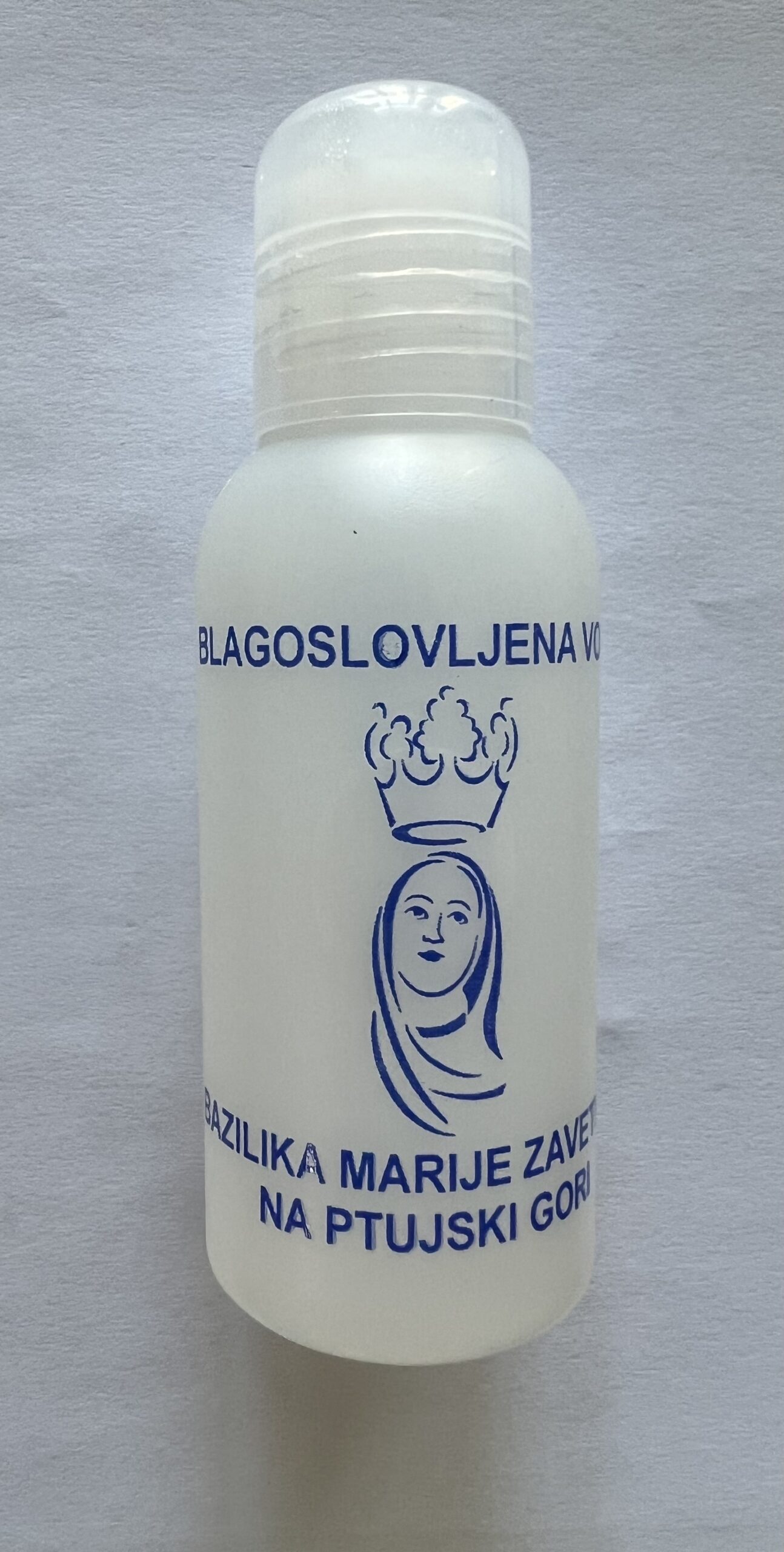
Before I leave the church, I'm going to buy a few devotional items for friends and also a few small bottles of holy water. The text on the bottle is in Slovene and in Dutch it translates to “Basilica of Our Lady, Protector on Ptuj Hill.".
What a rich person I am to be able to visit this place of pilgrimage. So much is bestowed upon me again! Thank you, Mary!
Environment
In the vicinity of Ptujska Gora, there are many hiking and cycling opportunities.
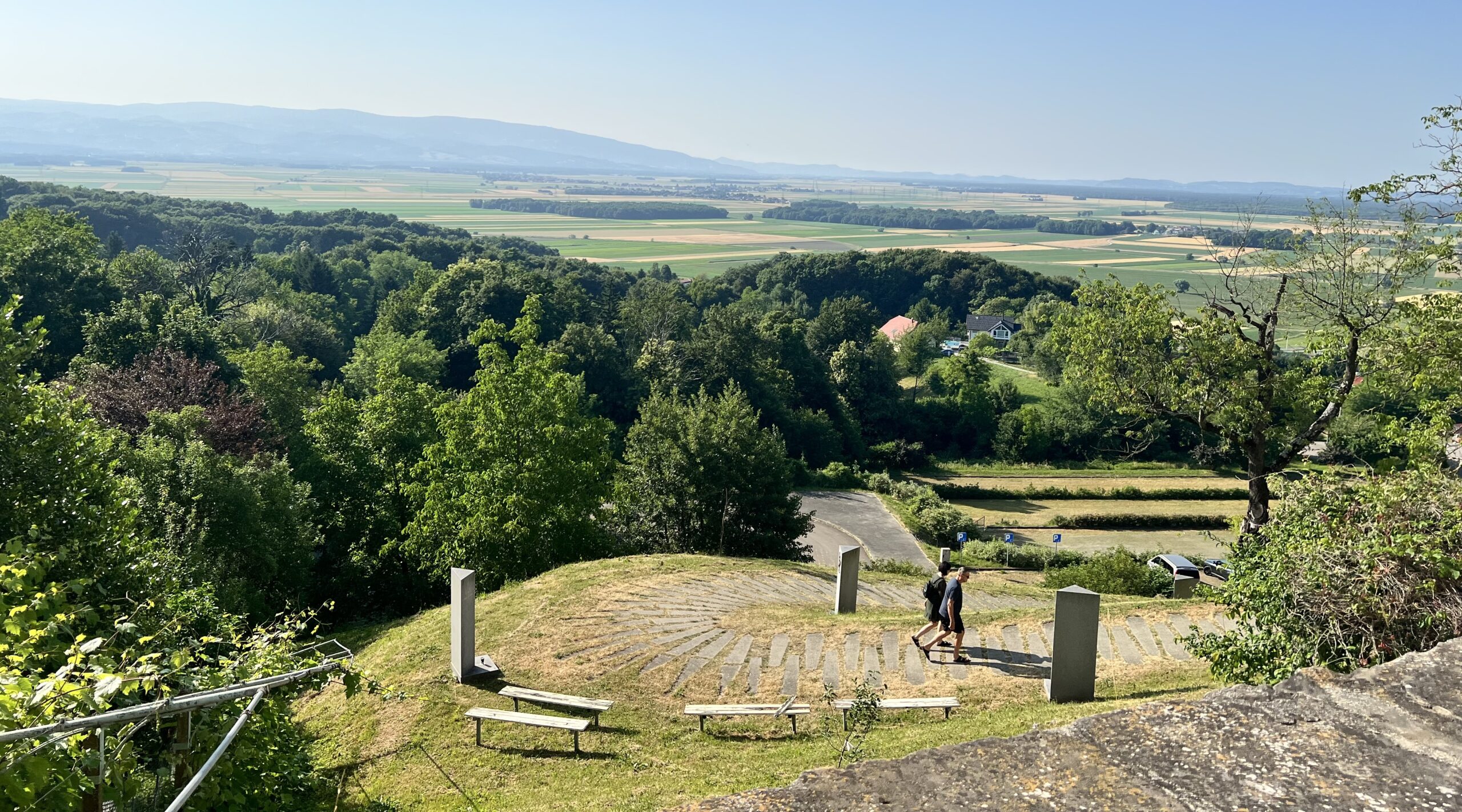
From the town of Ptuj to Ptujska Gora is a 15 km journey south-west.
Departing from Maribor to arrive in Ptujska Gora involves travelling 35 km to the south.
Leaving Slovenska Bistrica to go to Ptujska Gora involves travelling 25 km to the east.
Travelling from the Slovenian capital, Ljubljana, to Ptujska Gora means covering 135 km to the northeast.
Leaving the Croatian capital of Zagreb to get to Ptujska Gora means travelling 100 km north.
~~~

 Nederlands
  English (UK)
  Deutsch
  Français