History
In 1630, five daughters of the Discalced Carmelite nuns from ‘s-Hertogenbosch in the Netherlands came to Cologne. They fled the Netherlands due to the increasing dominance of Protestants, who imposed more and more restrictions on them. The sisters took up residence in the Neuenahrer Hof, previously inhabited by Protestants. This is located at the junction of Kupfergasse, Langgasse, and Schwalbengasse. They subsequently turned it into a convent. At the request of Johann Jakob Wissius (1619-1688), a councillor and later mayor (1682-1685), the Carmelite nuns established the Loreto Chapel.
The devotional image is carved from dark lime wood, the maker is unknown and it has been in the chapel since 1675.
The Loretto Chapel was built in 1673-1675, modelled on the “Santa Casa” (Holy House) in Loreto, Italy. It was consecrated on 8 September 1675 (the feast day of the Nativity of Mary) by Paul von Aussem (1616-1679), Auxiliary Bishop and Vicar-General of the Archdiocese of Cologne. The Baroque Mary Church was built on top of the Loretto Chapel; the church was consecrated in 1715 by Joseph Clemens of Bavaria (1671-1723), Archbishop-Elect of Cologne (1688-1723).
In 1801, the convent was closed and the sisters were expelled due to political secularisation. In 1803, a reallocation of parishes in Cologne took place, and the parish of St. Mariä in der Kupfergasse was established, under the patronage of St. Mariä Himmelfahrt (Saint Mary's Assumption).
In 1828, Cellites, members of the female branch of the Cell Brothers (Alexian Brothers), take over the enclosed convent.
In 1925, the devotional image is crowned by Karl Joseph Schulte (1871-1941), Cardinal and Archbishop of Cologne (1920-1941). This is done on behalf of Pius XI, Pope from 1922 to 1939, born Ambrogio Damiano Achille Ratti (1857-1939). Our Lady has two golden crowns here, namely this one from 1925 and a baroque crown from 2003.
During the night of 30-31 May 1942, Cologne was heavily bombed; this night became known as the “1000-Bomber-Angriffs” (attack by 1,000 bombers). Countless buildings were destroyed, including the chapel, the convent and its annexe. Just in time, the devotional image was saved by Sister Marzella Schui of the adjacent Mother House of the Cellites. Another bombing raid took place on 29 June 1943, and the church then collapsed. In 1947, the reconstruction of the church began, with a temporary emergency church. In 1948, the Black Madonna returned to the largely restored chapel. The silver Madonna statue by Franz Xaver Hellner (1819-1901) was severely damaged in the bombing and was later restored by Master Goldsmith Peter Bolt (1938-2020). In 1952, the church was back in use. In 1967, the restoration work was officially completed.
In the church hangs a Russian icon of Mary, which was donated in 2002 by Joachim Meisner (1933-2017), cardinal from 1983 and Archbishop of Cologne (1989-2014).
In 2003, the venerated image received a golden crown as a gift, which is encrusted with gemstones. In 2008, the interior of the chapel was renovated.
Pilgrimage site
The Marian shrine is called “St. Maria in der Kupfergasse” (Saint Mary in the “copper alley”). This is the centre of Marian devotion in the city centre.
Entering the pilgrimage site with its almost entirely walled forecourt, is to go past the open gate, which was made by the master blacksmith Heinrich Mähler (1908-1963).
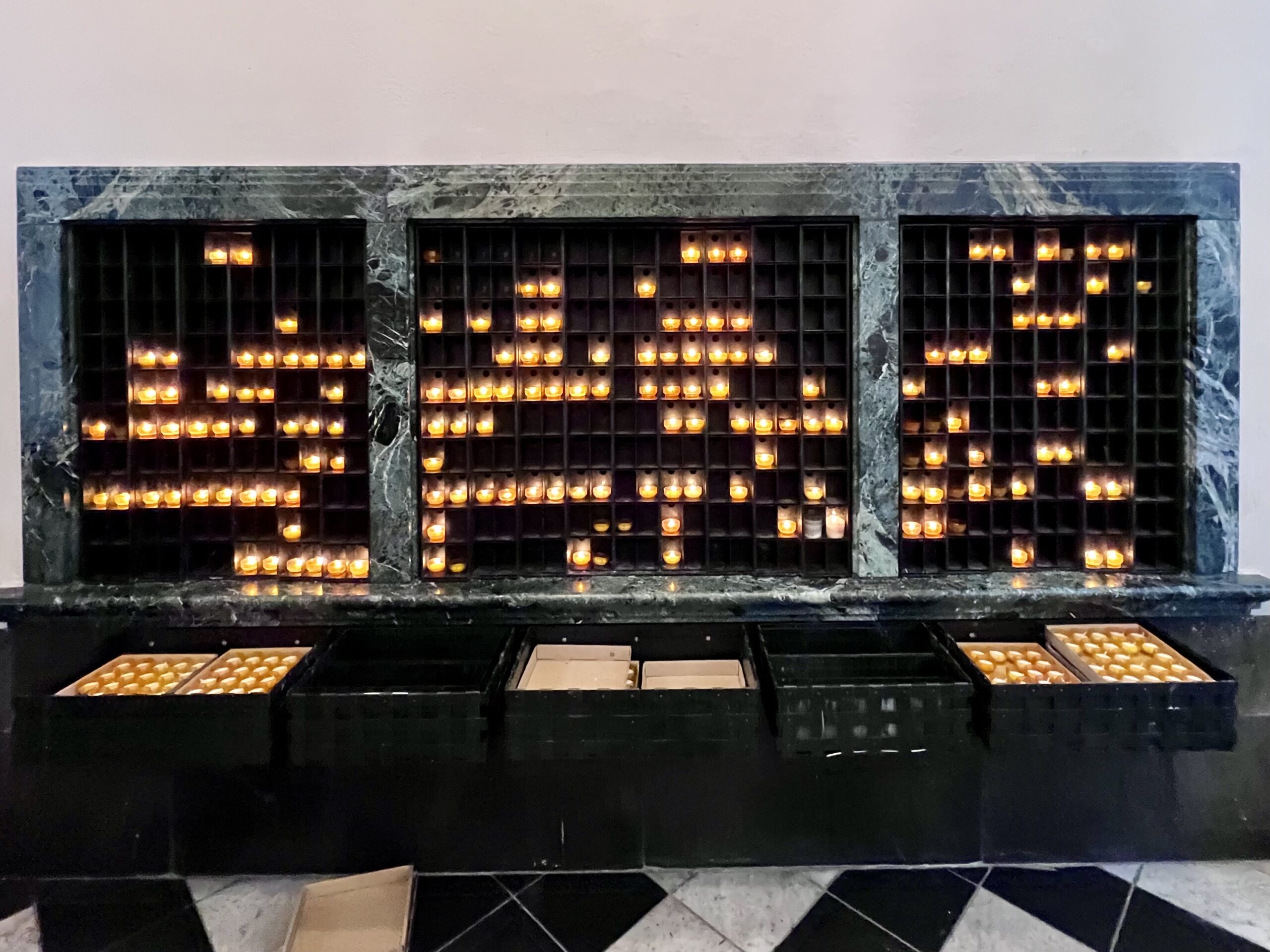
Upon entering the pilgrimage chapel, there is a wall with the opportunity to light candles. Dozens of lights burn here, lit by visitors who are aware of their own or others' suffering from an illness, seeking comfort from Mary or giving thanks to Our Lady.
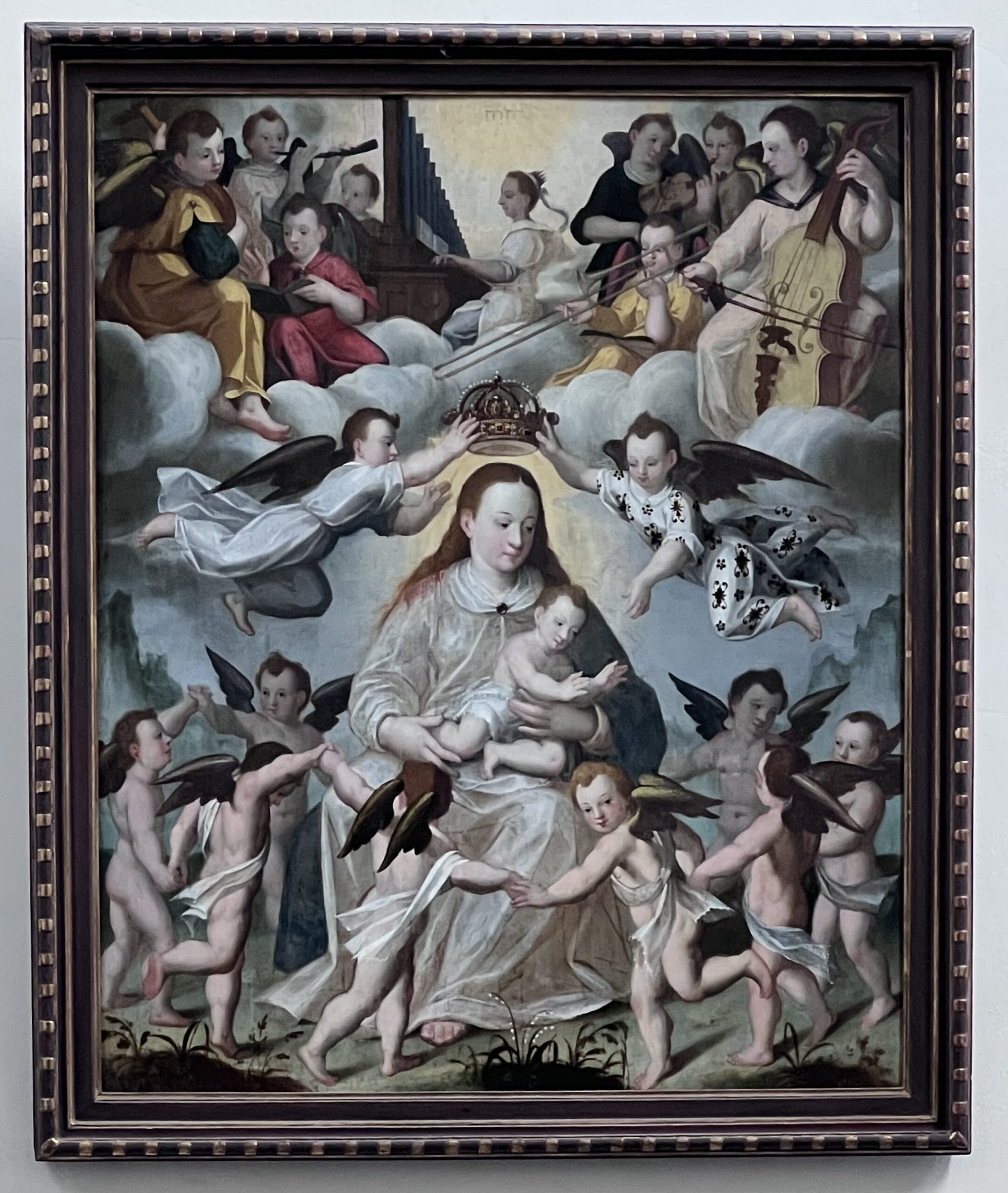
A painting of Mary and Child, dancing putti and music-making angels shows a joyful representation of good feeling. Two little angels crown the Virgin Mary.
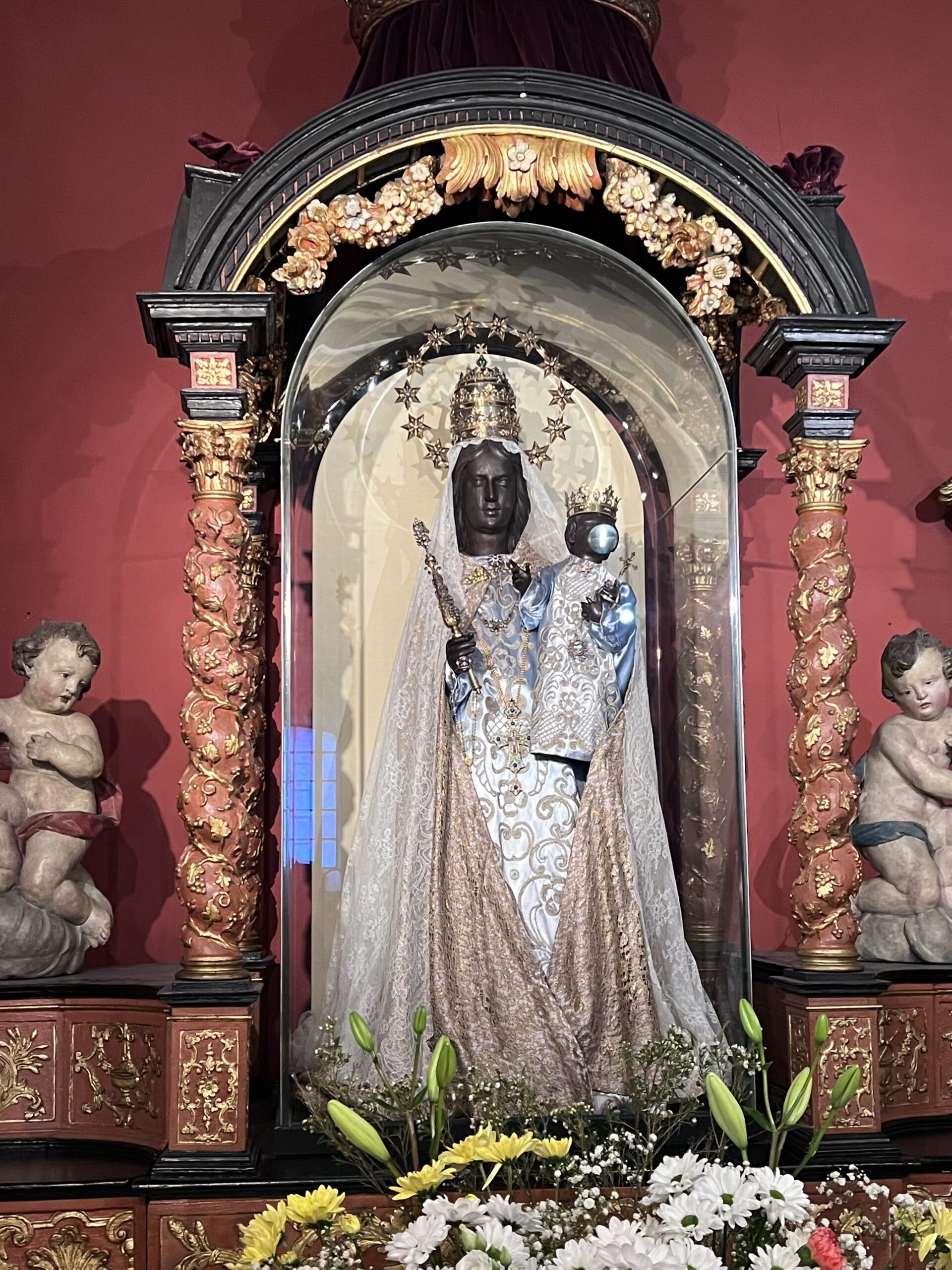
The miraculous image of the Black Madonna is housed in the church and has a place in the Loreto Chapel. The statue is approximately 140 cm tall. On her left arm, Mary holds her Child with a small globe, and in her right hand, she holds a sceptre. Mary's head is surrounded by a halo of 12 stars and radiates dignity. She looks at the visitor. The miraculous image stands on a 16th-century Portuguese Baroque altar, beneath a baldachin. Two small angels are placed to the left and right of the Mother of God.
In the church, there is a nearly 1-metre high effigy of a seated, silver Madonna and Child from 1892. It is a gift from the Marian Men's Congregation and comes from the workshop of Franz Xaver Hellner (1819-1901). Mary is seated on copper plates.
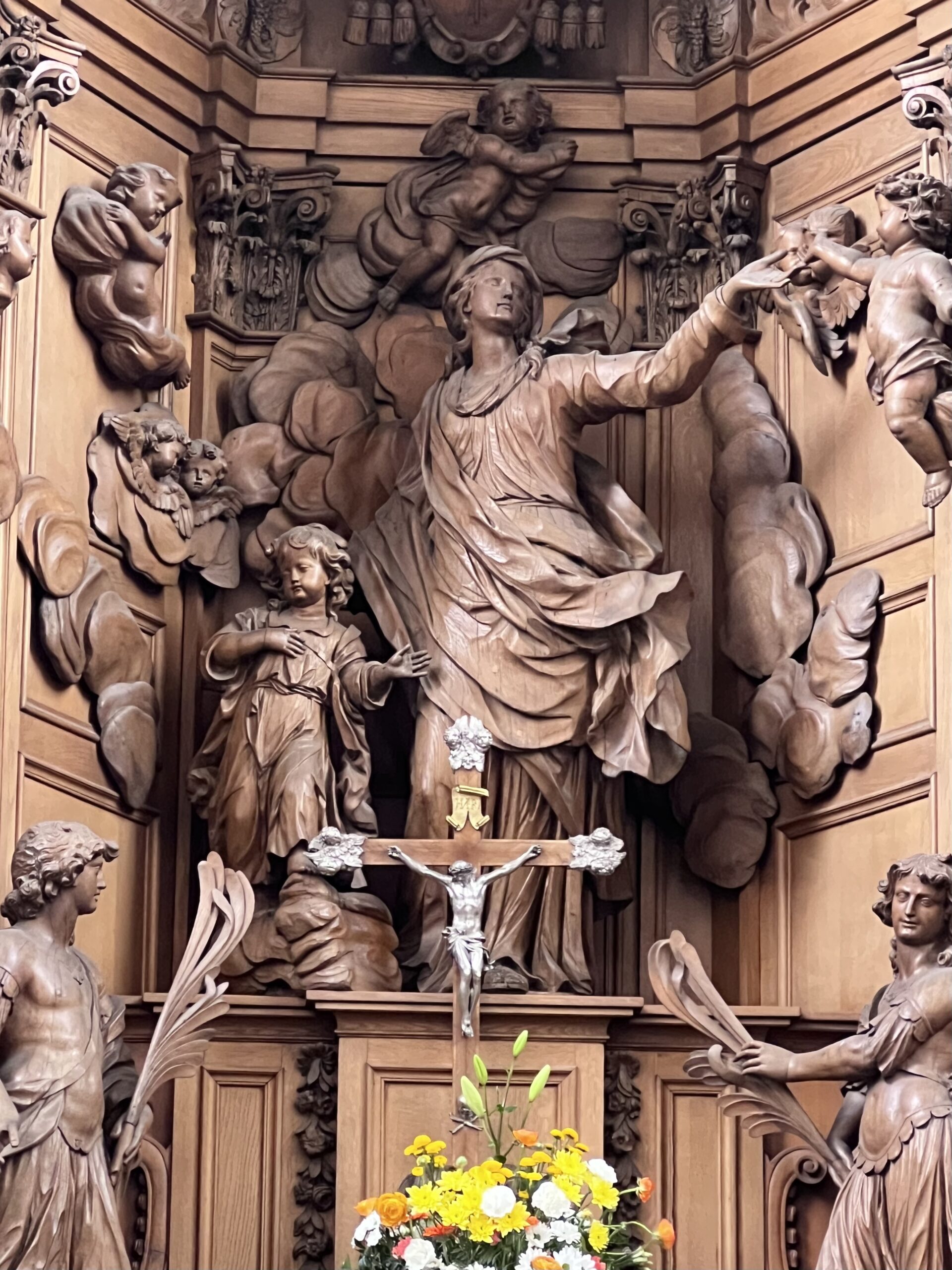
The Baroque oak high altar in the church is 10 metres high and features dark-coloured statues.
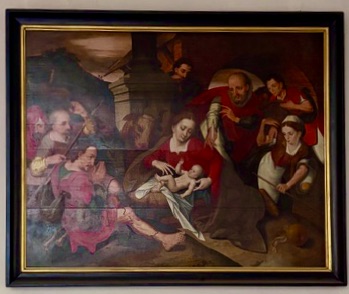
Visitors pause at the painting of the descent from the cross of Jesus. This also happens at a painting with Mary, the newborn Jesus, and visitors.
Every year, the Cologne Carnival organisation comes here to ask Our Lady for her protection and blessing for their activities. Supporters of the football club 1. FC Köln also frequently visit to call upon Mary's help. Residents from the city centre, who sometimes fear high water levels of the Rhine river, come here to ask Mary for help and protection against the threateningly high water levels.
Several times a year, celebrations are held in Latin in the chapel, with singing by the “Frauen-Choral schola”.
From 8 September, the feast day of the Nativity of Mary, there will be an octave and for 8 days there will be much prayer and celebration.
The pilgrimage chapel is open daily, with services held every day and the resort offers opportunities for confession.
ACCESSIBILITY
The pilgrimage site of St. Maria in der Kupfergasse is located in the centre of Cologne and belongs to the Archdiocese of Cologne.
Address: Schwalbengasse 1, 50667 Cologne.
Current information can be found at www.kupfergasse.de.
Experience
Today a visit to the Marian shrine of Cologne, which is located in the city centre. This is the heart of Marian devotion in the diocesan city on the Rhine. To feel that heart is the aim of my visit to “St. Maria in der Kupfergasse”. Even though this large city is known for its Cathedral and Maria is frequently seen there, my focus is on the Marian shrine in the old city centre.
When I reach the entrance, a stone reads “gehe nicht vorbei one ein “Ave” zu beten” (do not pass by without reciting an Ave Maria). That is a fitting welcome, suits Mary and me. I begin by reciting a few Ave Marias and then proceed to the forecourt.
In the facade, right at the very top, there's a depiction of Mother Mary and Child. What a height! I really have to crane my neck for this!
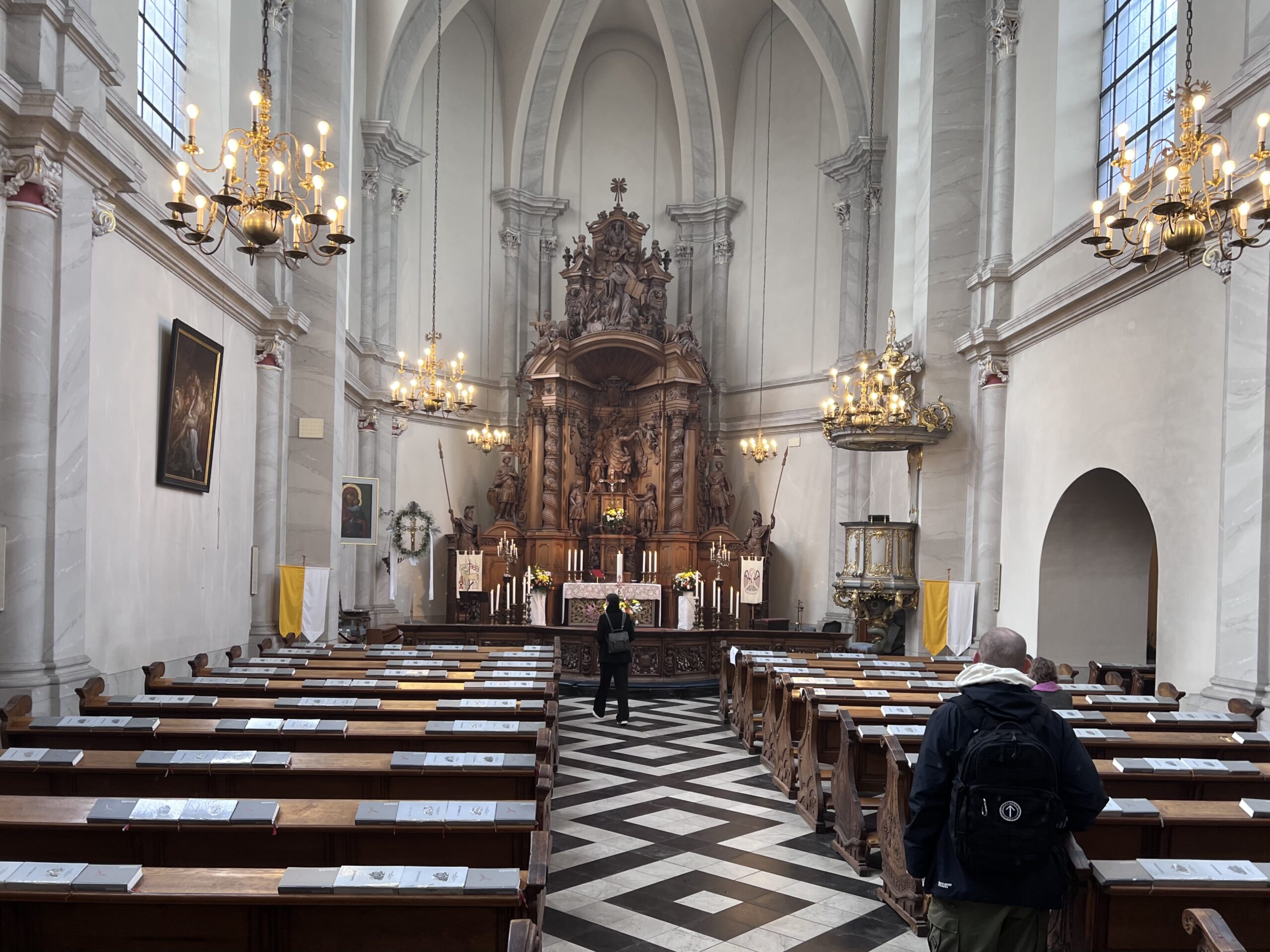
Next, I go inside and see many candles burning. I am told that around 5,000 candles are lit here each week as thanks to and aid from Mary. What a source of light! A beautiful, dark brown altarpiece catches my eye; this is the high altar. Mary is surrounded by angels and ascending into heaven. Lamps are burning in the space, and the walls are quite bare.
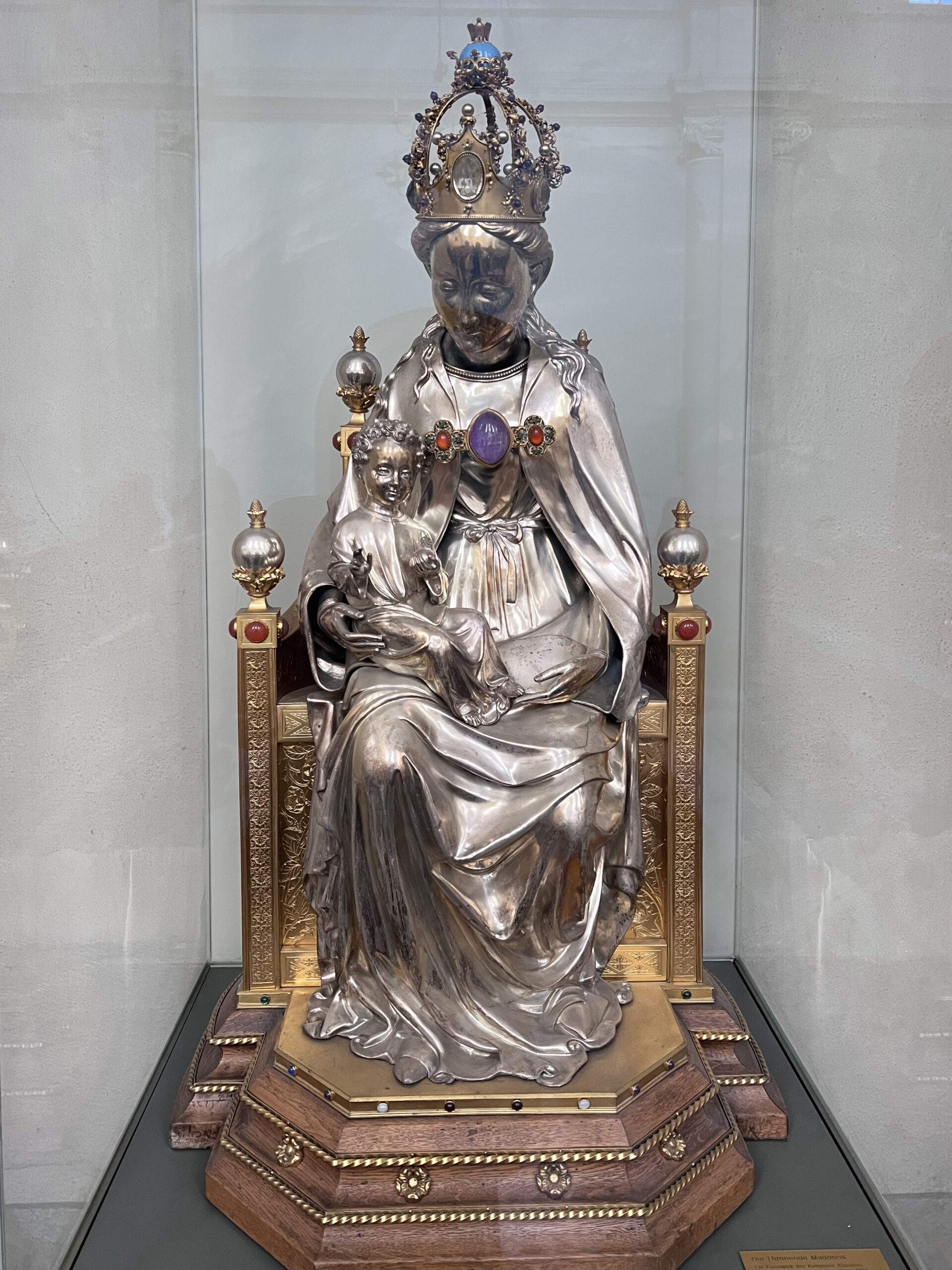
I see the enthroned Madonna with Child. It is a silver artwork from 1892 by the German artist Franz Xaver Hellner. It comes from the “Marianische Männerkongregation 1608 Köln”.
In the church, I stand a little longer by an icon of Mary and Child. Artists are such special people with great qualities!
In a corner, on a console, stands an effigy of the crowned Mary and Child. The Mother of God holds her Little One on her back arm and in her left hand, She holds a sceptre.
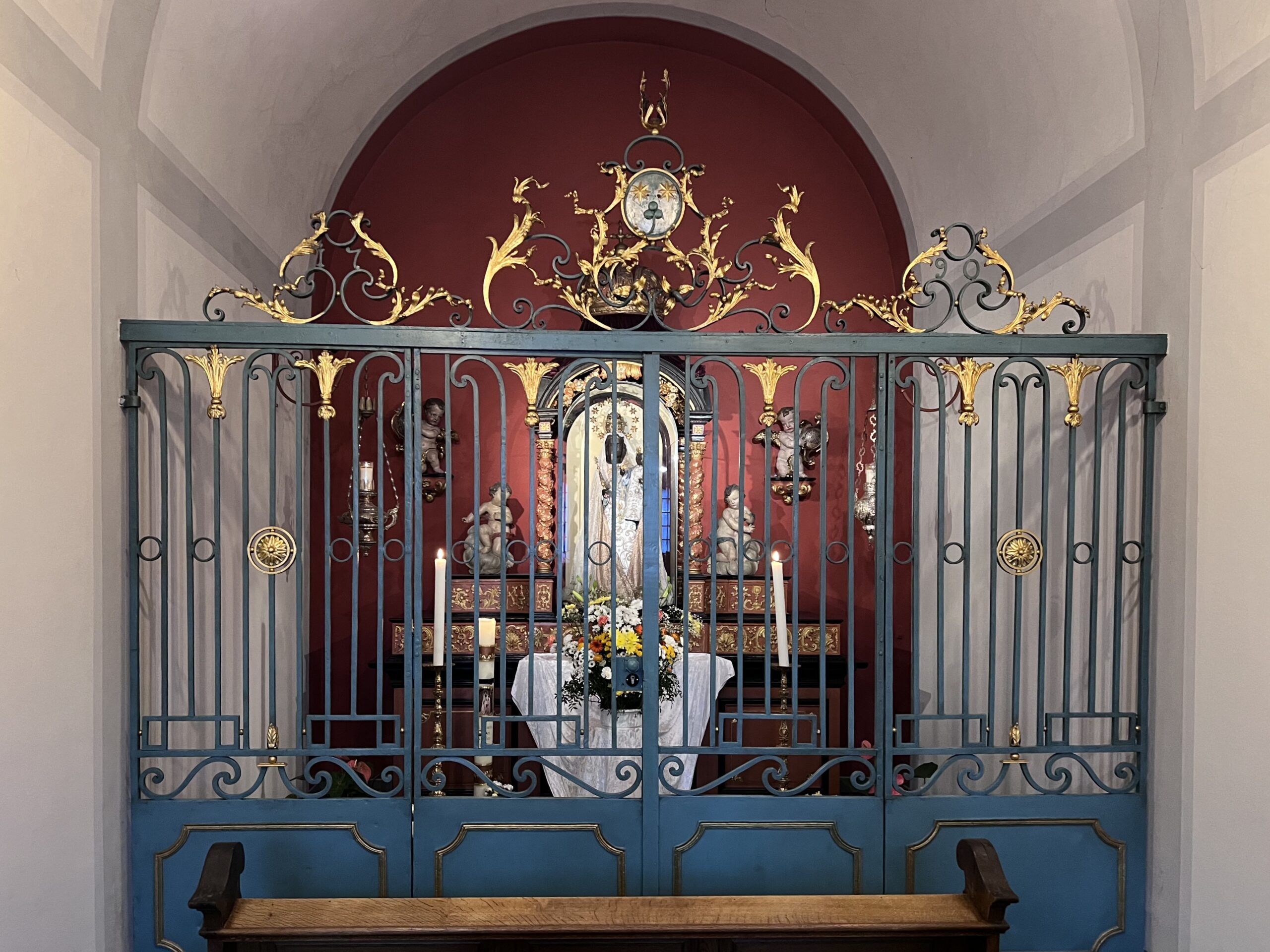
Next, I enter the space I most longed to see Maria. Behind a strong grille with gold-coloured decorations stands the Black Madonna. This is the Loreto Chapel. I feel as if I am back in the Italian pilgrimage site of Loreto. Mary and Jesus are crowned, and Mary has a halo with 12 gold stars around her head. Putti are placed on either side of Mary and Child. If I see correctly, Mary's eyes are directed at the visitors, she is carrying her Child on her left arm, and in her right hand, she holds a sceptre. Mary and Child are festively dressed in long robes. It feels like a great gift to be allowed to be here! This is the place for another Hail Mary. Thank you, Mary!
Environment
The Cathedral is near the pilgrimage church with a chapel in Kupfergasse; it's about a 5-minute walk.
Churches can also be visited in Cologne, such as St. Maria in Lyskirchen, An Lyskirchen 10, 50676 Köln, St. Mariä Himmelfahrt, Marzellenstrasse 32, 50668 Köln and St. Ursula Church, Ursulaplatz 24, 50668 Köln.
Leaving Aachen Cathedral and arriving at Cologne Cathedral means going 80 km to the northeast.
~~~

 Nederlands
  English (UK)
  Deutsch
  Français