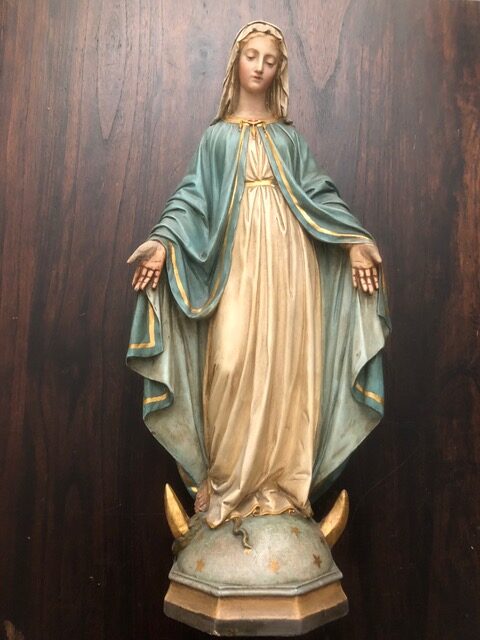
Roermond
History
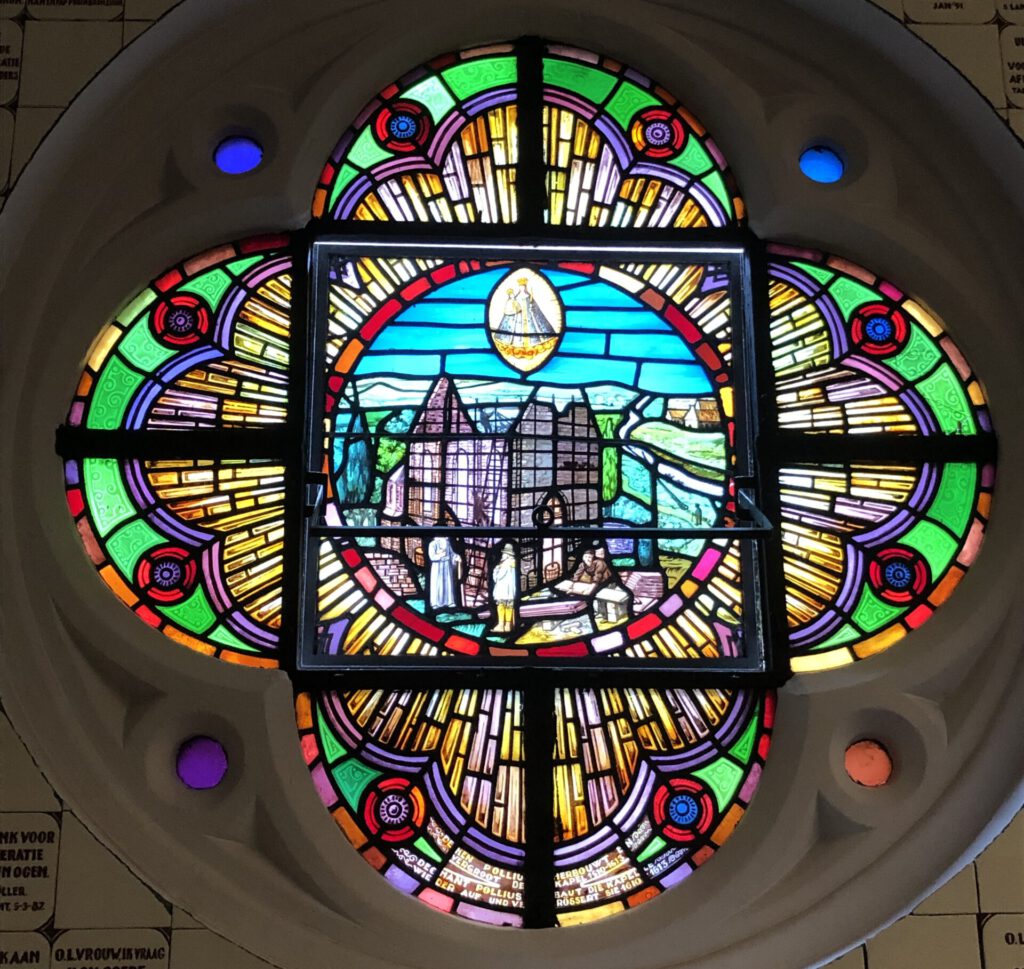
In 1607, another chapel is built on the sand hill. The number of believers increases, and the building quickly becomes too small. In 1610, a larger chapel is erected on the initiative of Petrus Pollius, who served as the vicar-general of Roermond from 1609 to 1611. He also laid the first stone. The chapel was completed in 1613. Devotion to Our Lady in ’t Zand grew even more, leading to the chapel being enlarged in 1684 and again in 1689.
During the Eighty Years' War (1568-1648), the chapel was demolished in 1578. The Spanish believed that the State Army of William of Orange could no longer use it as a stronghold at that time. This happened during the Siege of Roermond (1577-1578).
In 1797, during French rule, the chapel was closed. Five years later, in 1802, the Lady Chapel was reopened.
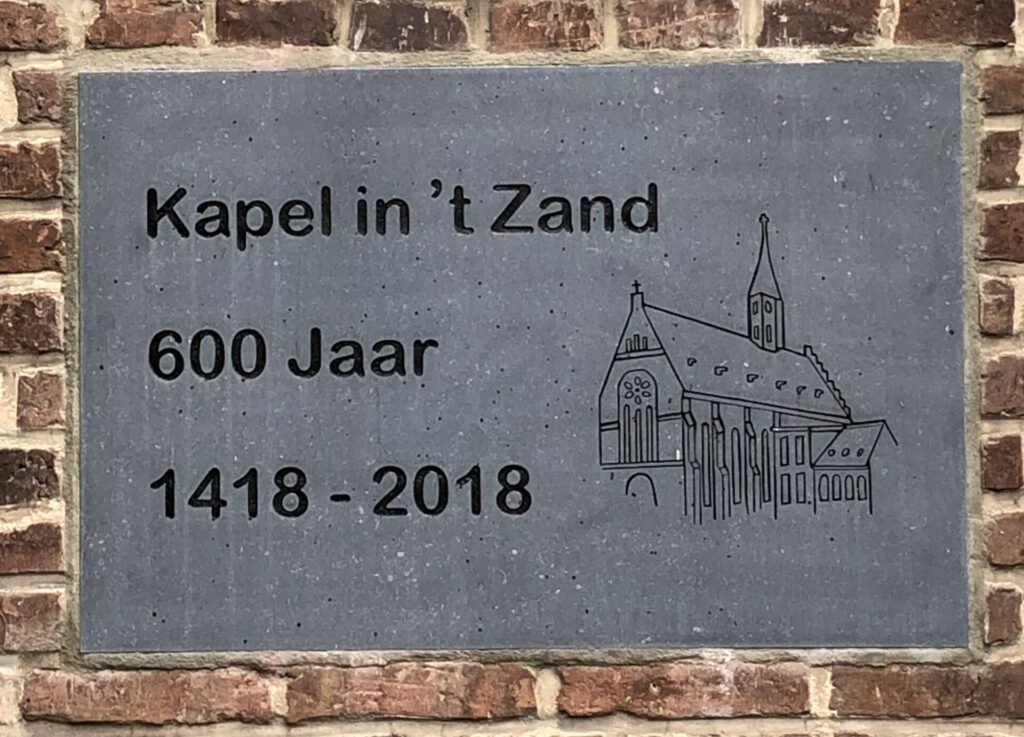
In 1862, Monseigneur Joannes Paredis (1795-1886), the Bishop of Roermond, decided to entrust the chapel to the Redemptorist Fathers. This was a great stimulus for the house of worship, as these fathers had a strong devotion to Mary. Later, ownership of the chapel passed to the parish council. In 1866, the current statue of Mary, which was made around 1500 by a woodcarving guild from Mechelen, was restored and stripped of its polychromy. This removed the colourful paints from the statue. In the same year, the chapel was also rebuilt, enlarged, and improved. A processional aisle was built between the chapel and the monastery. In 1877, the image of Mary and the infant Jesus was crowned by the Roermond bishop Joannes Paredis (1795-1886). This was done with two golden crowns, set with pearls and diamonds. The crowning generated considerable publicity, leading to a further increase in the number of pilgrims. The chapel once again became too small to accommodate the very numerous pilgrims. A new chapel was built...
The first stone of the current Our Lady of the Sands Chapel is laid in 1895. This is done by the Bishop of Roermond; Franciscus Boermans (1815-1900). The initiator and driving force behind the new chapel is Father J. Lohmeijer (1855-1917). The construction of the chapel was designed by architect Johan Kayser (1842-1917); a pupil of Pierre Cuypers (1827-1921). This chapel is constructed almost entirely in the Neo-Gothic style. The chapel is consecrated in 1896.
In 1921, a severe autumn storm hit the chapel tower, which had to be demolished. Three years later, the chapel had a new tower again. This is the current tower, designed by Roermond architect Caspar Franssen (1860-1932), who was also a pupil of Pierre Cuypers.
In 1940, a November storm caused further damage to the chapel. In that year, the chapel was sold by the Sint-Christoffel church board to the Redemptorists; the Order of the Most Holy Redeemer.
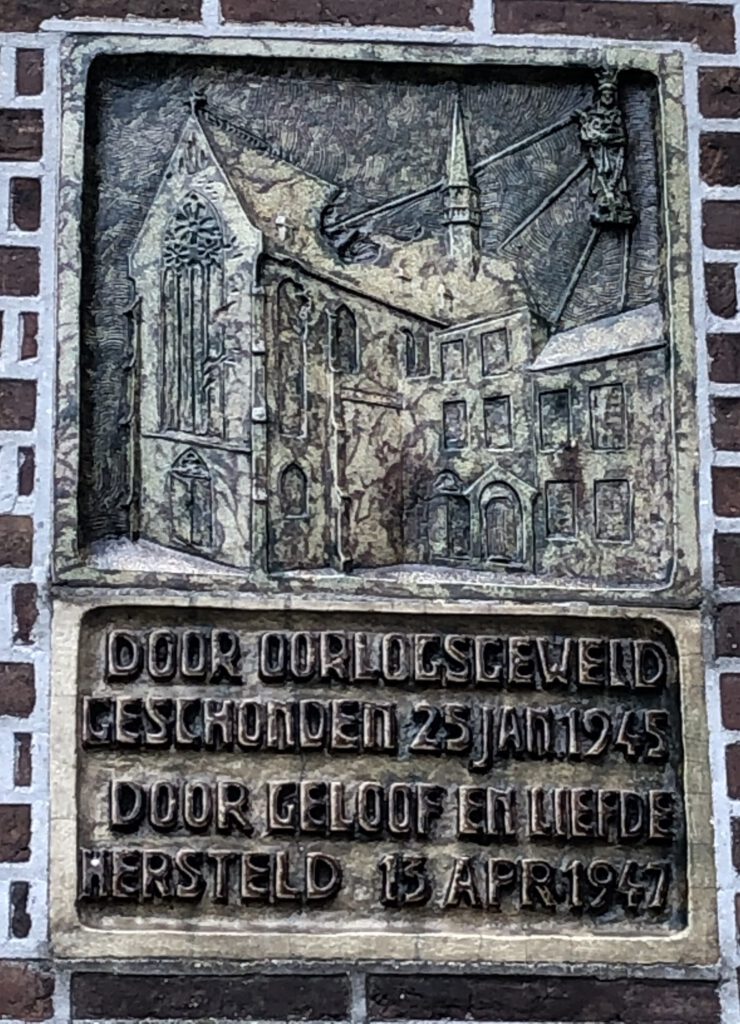
Towards the end of the Second World War (1940-1945), the chapel sustained war damage. This occurred in January 1945, shortly before the liberation of Roermond. The roof was destroyed by German grenades, and the interior of the chapel was also devastated by the violence of war. The chapel was repaired in 1947.
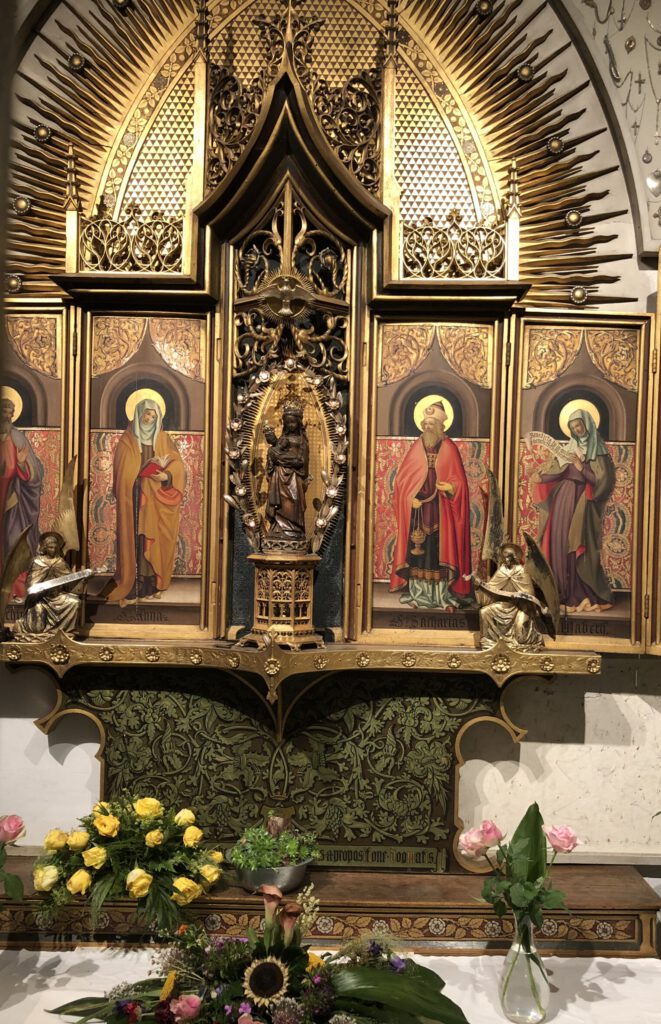
In 1954, the St. Mary's throne was made by the Brom Brothers from Utrecht. It houses the miraculous statue of the Virgin Mary.
In 1987/1988, the chapel was restored and renovated. Unfortunately, in 1990 a storm caused damage once again. In 1992 the chapel suffered further damage, this time due to a nocturnal earthquake. The restoration work was carried out by the firm Schoonekamp of Amsterdam and was completed in 1994.
Pilgrimage site
In the Chapel of Our Lady in ’t Zand, the triumphal arch is striking and impressive. This arch was painted in 1904/1905 by Albin Windhausen (1863-1946) based on sketches by the renowned Roermond architect Pierre Cuypers (1827-1921) and Father Jan Kronenburg (1853-1940), rector of the Chapel of Our Lady in ’t Zand.
The chapel displays sculptures and wood carvings by artists like Jos Thissen (1840-1920) and Hermanus te Riele (1842-1922), who created the triumphal cross and pulpit in 1897. The Stations of the Cross are painted on copper and are the work of the German painter Albin Windhausen (1863-1946).
The large stained-glass windows from 1896, 1897, 1904 and 1990-1992 were designed and made by, among others, Frans Nicolas (1855-1939), Eugène Laudy (1921-1995) and Atelier Flos from Steyl. The altar of Saint Joseph bears witness to beautiful wood carving. It was made in 1898 by Jos Thissen (1840-1920).
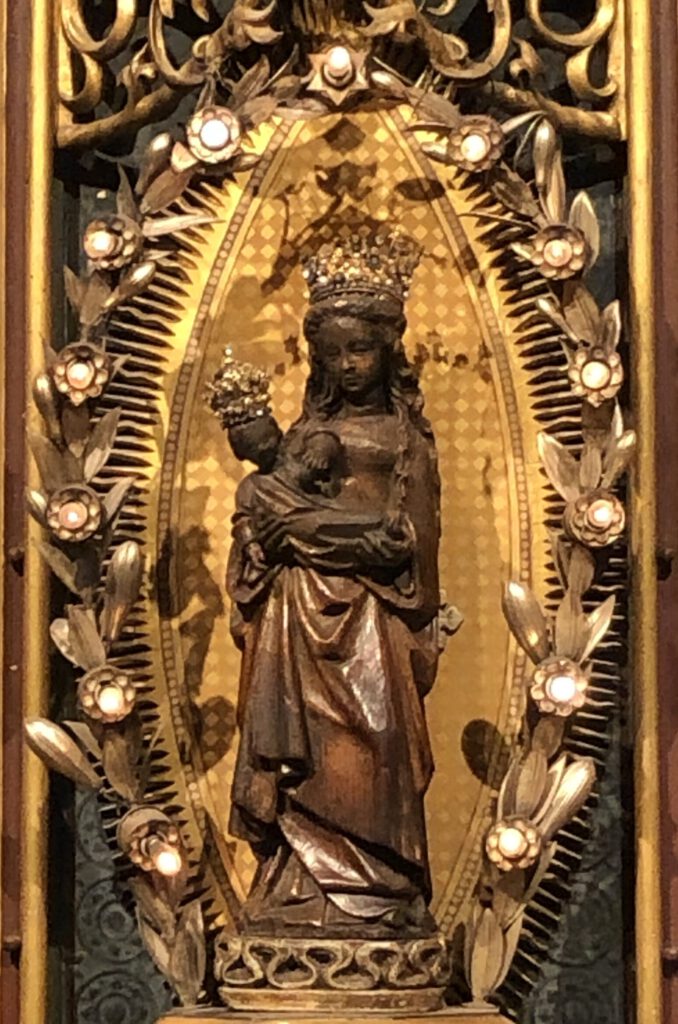
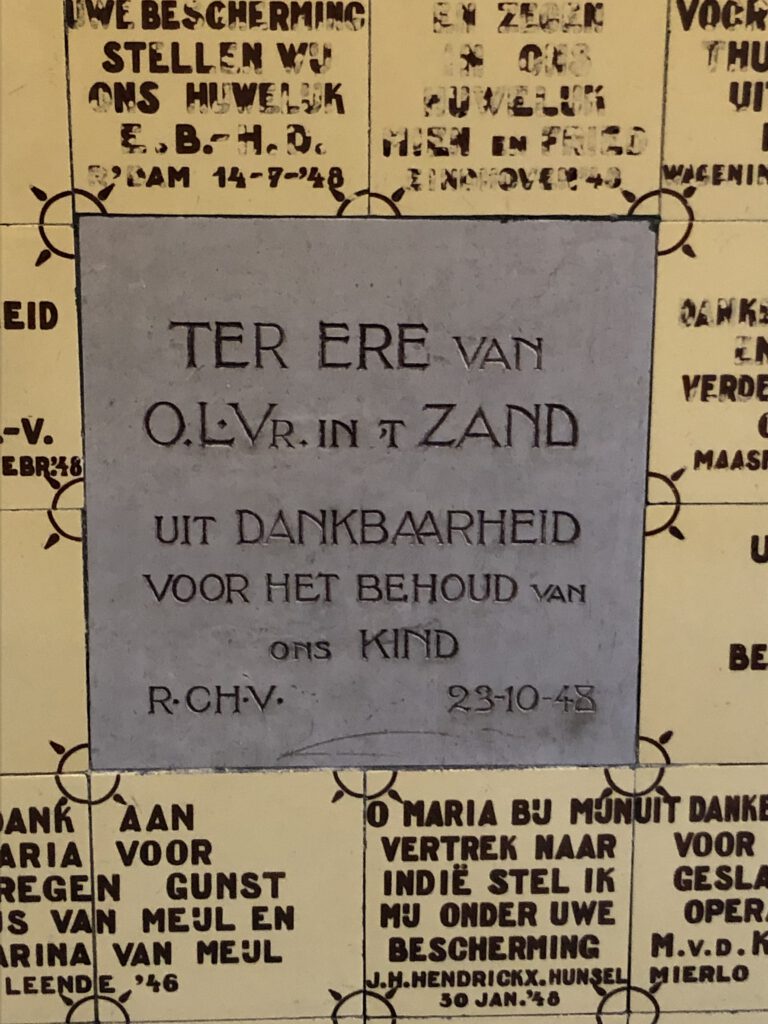
The statuette of Our Lady in ’t Zand is located in the chapel's chapel. Mary is surrounded by a nimbus with 13 lights. This 35-centimetre-high effigy has become known for answered prayers. It is therefore a miraculous image. For centuries, people have gone to the chapel to pray to Mary and express their gratitude to Her. This is evidenced by more than 7,000 votive tiles on the walls of the processional aisle between the chapel and the former monastery building. The tiles started being affixed in 1927.
The chapel in the main chapel dates from 1878. Next to the statue is the well, from which the statue was once retrieved. The back wall shows a mosaic of the Coronation of Mary in heaven. This mosaic was made in 1879 by Luigi Solerti from Innsbruck.
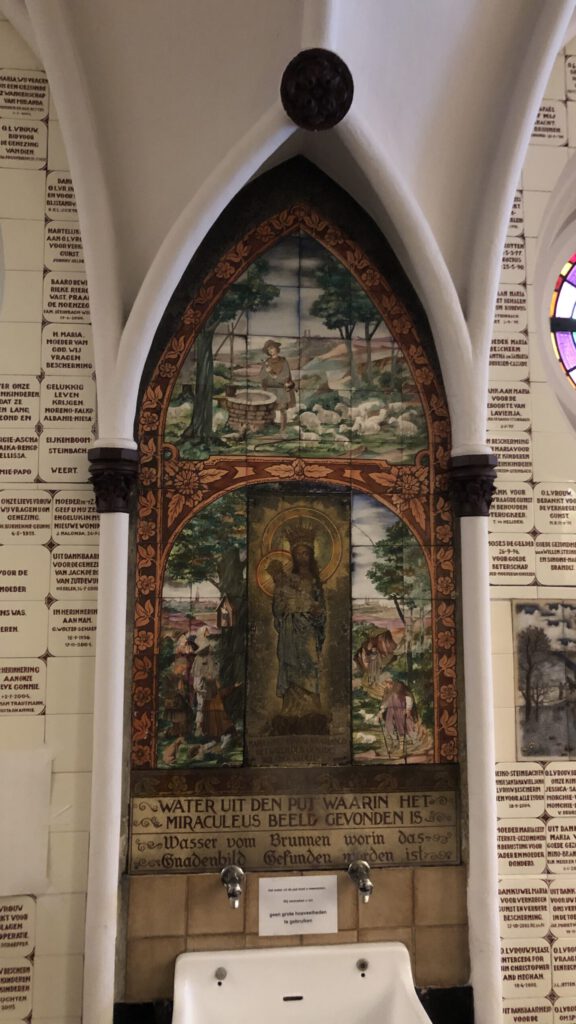
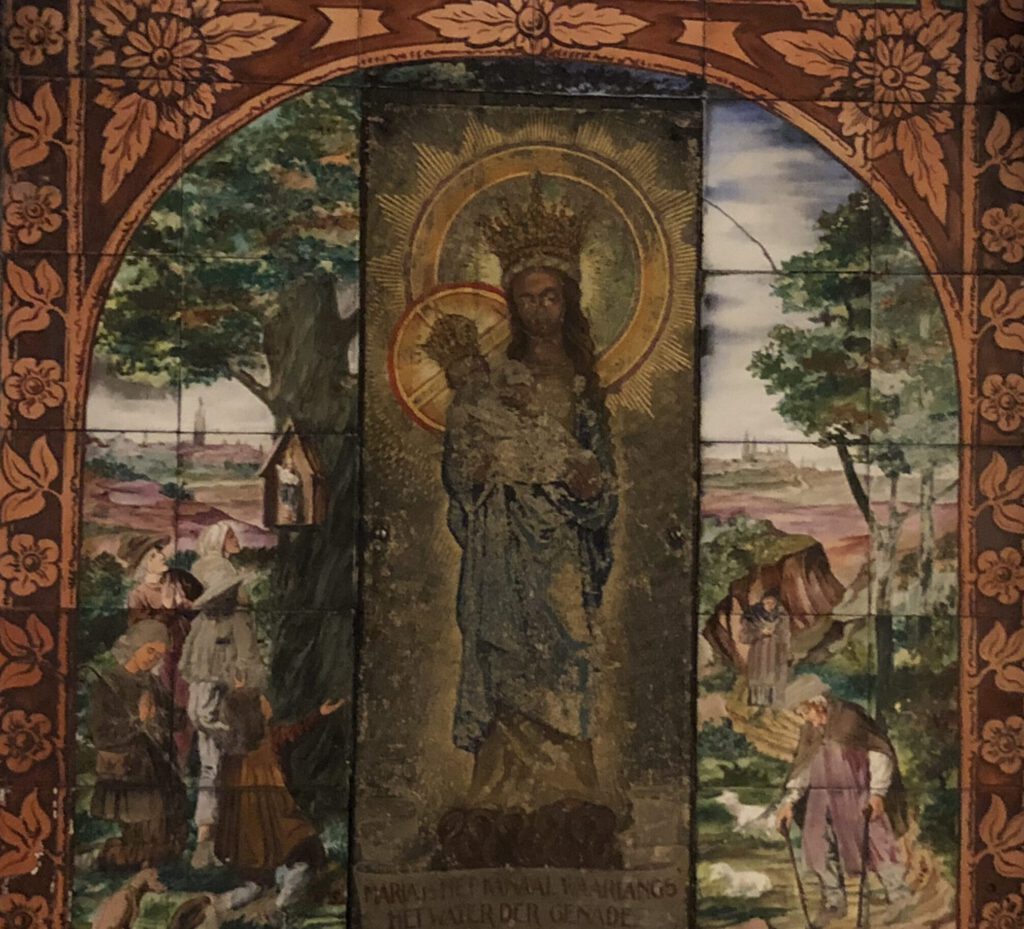
In the processional aisle, there is also a space where devotional items are for sale. Above the taps in the processional aisle, there is a painting of Our Lady in ’t Zand. Mary is surrounded by a tile tablet depicting scenes from the history of the chapel and the statue. Near the outer door of the processional aisle, on the Parklaan side, stones are set into the wall, referring to the chapel's past. This processional aisle is open daily.
At the chapel, on Parklaan, lies a Calvary Park, which was laid out between 1910 and 1920. A plan by Pierre Cuypers (1827–1921) forms the basis for this.
ACCESSIBILITY
Roermond is situated in the centre of the province of Limburg, near the Eindhoven-Maastricht motorway. The Chapel of Our Lady in ’t Zand is located outside the city centre, on Kapellerlaan and Parklaan.
The necessary information can be found on the website www.kapelinhetzand.nl.
Experience
The Roermond Chapel in ’t Zand is a pilgrimage site where I like to stay. The history of the chapel tells a lot, there is much to see inside the chapel, and there is a captivating atmosphere to be there, to pray and to reflect.
The chapel has beautiful stained-glass windows, an impressive triumphal arch, and many more things to admire. What strikes me the most is the devotional image. I can look at this for a long time. I see the halo and count 13 lights.
Near the statue is the well from which the image of Mary was retrieved. A large mosaic is affixed to the wall, depicting the coronation of Mary in heaven.
During the procession I am impressed by the thousands of votive tiles. I learn that over seven thousand tiles are affixed to the walls. These are many expressions from pilgrims to show their thanks to Mary.
The stained glass windows in the processional aisle are certainly worth admiring. They reveal a great deal about the history of the chapel. Halfway down the processional aisle, I come to taps. This is where water is drawn from the well. Pilgrims attach great importance to this water. Above the taps, I see a painting of Our Lady in ’t Zand. This artwork is surrounded by a tiled tableau depicting scenes from the history of this Dutch pilgrimage site.
In the chapel, I find the text of the prayer to Our Lady in ’t Zand, Help of Christians. The text reads:
“Our Lady of the Sand,
in your goodness
You help all who come to you.
Many people have asked you for help.
They have called for you
in times of need and misery,
when the city was ravaged by war,
threatened by fire or floods.
In your chapel, they have asked for help
and they have found hearing.
I therefore ask you:
be also now
a pillar of strength and support
For all who may need it.
Maria, pray for me.”
Posted 8 August 2020
~~~

 Nederlands
  English (UK)
  Deutsch
  Français