History
In 836, a monastery was founded in Stavoren by the priest Odulphus (c. 775-c. 865). He dedicated the abbey to the Mother of God. In 1132, this monastery was transferred to the Benedictines. The Abbey of Our Lady houses an old statue of Mary, and many pilgrims come to pray before it. Mary is depicted dressed in Frisian traditional clothing and even wearing a Frisian cap. The statue of Mary is also known as the Frisian Our Lady. In 1495, the Benedictine monks moved from Stavoren to Hemelum. This village lies on the edge of the Frisian region, or the “gouw” of Sevenwouden. The statue of Mary was moved along and given a central place in the monastery. It is said that the statue later went to Bolsward. However, research conducted later showed this to be incorrect. In 1270, the Franciscans from Hemelum came to Bolsward and founded a monastery there. This monastery also received many visitors who wished to pay homage to the statue. Bolsward was more centrally located than Hemelum, and consequently, the town grew as a regional centre. Interest from pilgrims in the statue of Mary increased in Bolsward. The honorary title "Frisian Our Lady," including the addition "Sevenwouden," was transferred from the statue in Hemelum to the statue in Bolsward.
In the 14th century, the image of Our Lady of Sevenwouden acquired the title Our Lady of Friesland. The emphasis on Frisian identity contributed to this. In Bolsward, the first chapel for Maria of Sevenwouden was a wooden box attached to a wall. Later, a covered chapel was built over one of the canals, and the statue was placed inside. This chapel was initially made of wood and years later of stone.
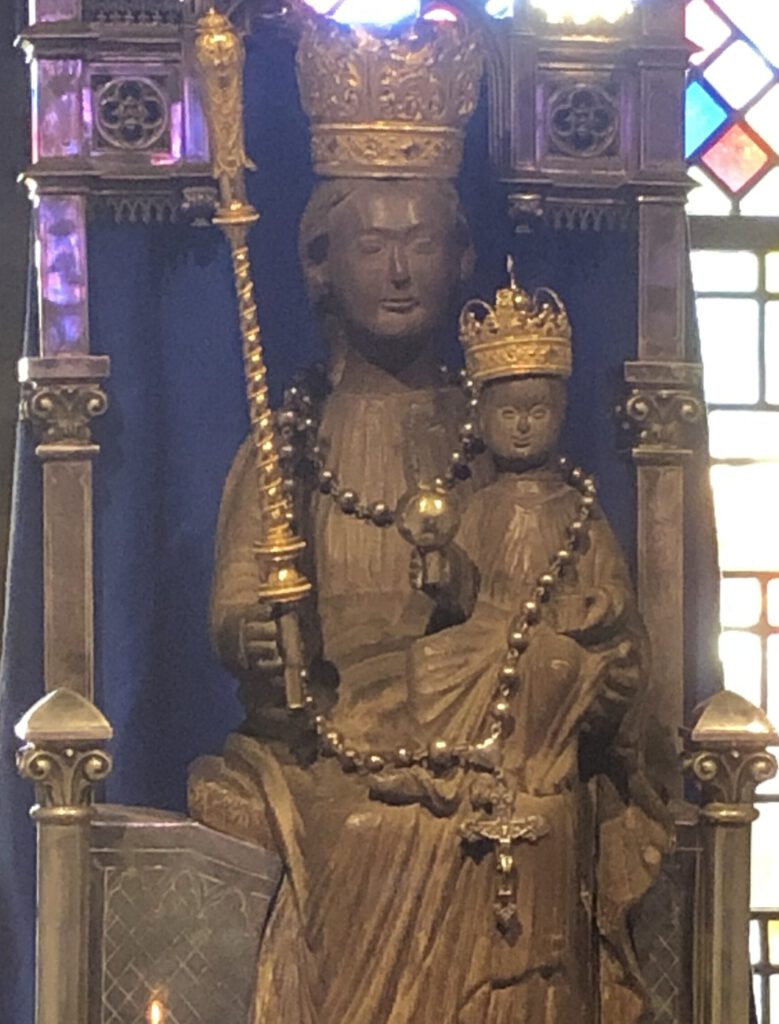
The statue of Mary has Byzantine origins. The depiction is “Sedes Sapientiae” or “Seat of Wisdom”. Byzantine art in the Middle East often showed such an image of Mary, as early as the 5th century. Mary holds a golden sceptre. Little Jesus sits on her left knee. He holds a globe in his right hand. Golden crowns adorn the heads of Mary and Jesus. The statue rests on a silver throne, which stands on a silver pedestal. The statue is approximately 55 centimetres high and 24 centimetres wide. The artwork is made of heavy oak. Once the statue was painted, but it was later left bare. The effigy was made in German Westphalia and dates from the 13th century.
In 1515, the statue of Mary miraculously escaped destruction. A troop of soldiers, composed of Saxon mercenaries known as the Band of the Black Hope, overran Bolsward. The city was plundered, set ablaze, and destroyed. The chapel of Our Lady of Sevenwouden was engulfed in flames. The chapel housing the statue of Mary stood on a bridge over a canal. The remarkable statue fell into the canal and was later found floating upright in the water. After the disaster, a new chapel was built for the statue of Mary. This became known as the Chapel of Miracles.
Bolsward is also affected by the iconoclasm of the Reformation. In 1580, Protestant soldiers enter the city and destroy statues of saints. The invaders want to throw the image of Our Lady of Sevenwouden onto the stake, but they cannot find the statue of Mary. The statue is missing! A little later, a skipper finds the statue of Mary in the city moat. The well-known statue is then taken to safety, as the Protestant rulers ban the Catholic religion and destroy statues. In 1776, the friars leave Bolsward and the Catholic church comes under the authority of secular clergy; non-clergy. For safety reasons, the statue is housed with the Friars Minor.
Miraculous healings are attributed to Maria van Sevenwouden. These miracles are recorded in the Book of Miracles. The original copy probably dates from the 16th century. This book records miraculous answers to prayer that have occurred over several centuries. The oldest known miracle dates from 15 May 1515. Doctors and specialists have no explanations for the miraculous healings included in the Book of Miracles. These are events attributed to divine powers. The copy of the Book of Miracles present in Bolsward dates from 1890. It is a copy, as it was transcribed from a 1653 manuscript by Hans Hansens Bruinsma (1586-1667). The miracle stories from the Book of Miracles were recorded out of conviction. The miracles occur, among other things, during childbirth, death, fractures, drowning, and impending shipwrecks. At the beginning of the 20th century, devotion to Mary experienced a revival, and in 1926, miracles occurred again. The numerous miracles have enormously increased the appeal of the statue in Bolsward.
On 15 August 1944, pastor Mamertus Staal (1892-1969) preached in the Saint Francis Church in Bolsward, promising a chapel for the Marian statue if the city were spared from major wartime violence. Later, this proved not to be financially feasible. In 1945, for the first time since the Reformation, a procession was held outside the church. It was pastor Mamertus Staal who took the initiative for this.
Since 1934, Maria van Sevenwouden has been housed in the Sint-Franciscus Church. The statue is located in a niche at the back of the church. In 1970, the niche was converted into a chapel, which was extensively renovated in 1997. Maria has been given a place of honour in the church.
In 1990, a copy of the statue of Mary was made by the Bulgarian sculptor Wladimir Zlatkov (1947). In that year, the replica was presented to Pope John Paul II in Rome. The Pope passed the statue of Mary on to the administration of the Willibrord Centre in Rome. As a result, the statue of Mary of Sevenwouden came to the Church of St. Michael and St. Magnus in 1992, also known as the Frisian Church, which stands near St. Peter's Square.
The 500th anniversary of Blessed Maria of Sevenwouden was celebrated with great interest in 2015.
In 2017, Pope Francis elevated the Church of Saint Francis to a basilica.
Pilgrimage site
The Basilica of Saint Francis in Bolsward receives many visitors annually. People often come to venerate and pray before the miraculous image of Our Lady of Sevenwouden.
By praying and turning to Our Lady of Sevenwouden, dozens of miracles have been performed. These miraculous events are recorded in the Book of Miracles.
The well-known statue is in a chapel, at the back of the basilica. An iron fence protects the Miracle Image of Our Lady and her Child.
The annual feast day of Maria van Sevenwouden falls on the Sunday between Ascension and Pentecost.
On special days in Bolsward, a song about Our Lady of Sevenwolden is sung. The title of the Marian song is “wees ons nabij” (be with us). The song was written in 1945 by Sister Martina (Bertha Ida) van der Meer (1906-2001). The first verse reads:
“Be near us, O Gentle Mother
The Frisian Sevenwouden.
You seek us with Frisian loyalty,
We will keep you for ourselves.
Our yearning for God drives us.
’That is why we come to You.
For who You find,
Finds God, Your Child,
In Thee, O, gentle Lady.”
ACCESSIBILITY
Bolsward is located in the north of the Netherlands, in the province of Friesland.
The Saint Francis Basilica is located in the city centre at Grote Dijlakker 7, and within this house of worship stands the statue of Our Lady of Sevenwouden.
Up-to-date information can be found at www.franciscusbasiliek.nl.
Experience
I am visiting Friesland to visit Marian chapels and Catholic churches. At the top of my list is Bolsward with the St. Francis Basilica to visit Our Lady of Sevenwoldings there.
I enter the impressive basilica and immediately head to the Lady Chapel at the back of the church. Here I stand in the impressive space of the basilica with the well-known statue of Our Lady of Sevenwouden before me. I look at the statue of Mary with Child. This is the Frisian Our Lady. This miraculous statue dates from the 13th century! What a turbulent history this effigy has known!
When I have prayed for a while before the Miracle Image of Mary, thoughts come to me about Our Lady's experiences in Bolsward. I feel it a privilege to be allowed to stand here with Our Lady of Sevenwouden.
A few candles I let give light. Many candles are burning at Our Lady of Seven Woude. Mostly this is as thanks to Mary. After all, Our Lady still performs miracles here. A very good feeling comes over me in this basilica. How happy I am to be allowed to be here.
Every day, people come to the Miraculous Image to pray to Mary. Visitors also share their feelings with Mary, as I am doing now.
Environment
From Bolsward, travel 11 km south-east to visit the beautiful city of Sneek, which includes St. Martin's Church.
Sneek – St Martin's Church
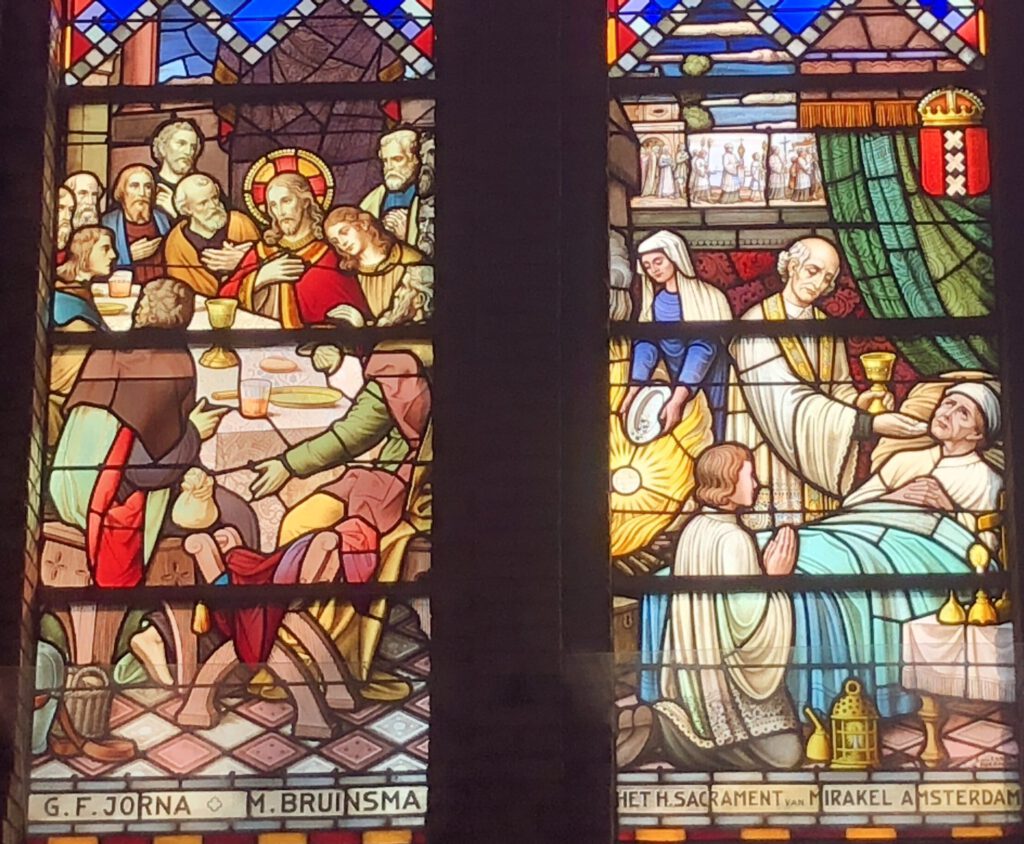
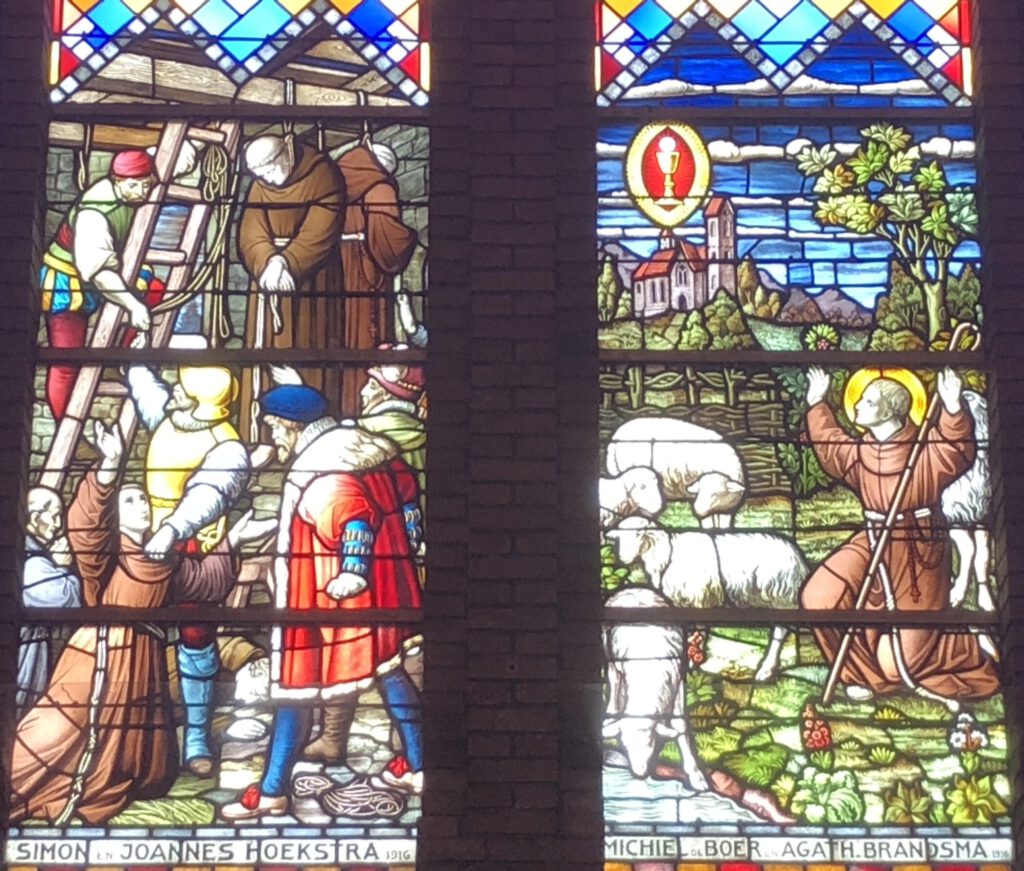
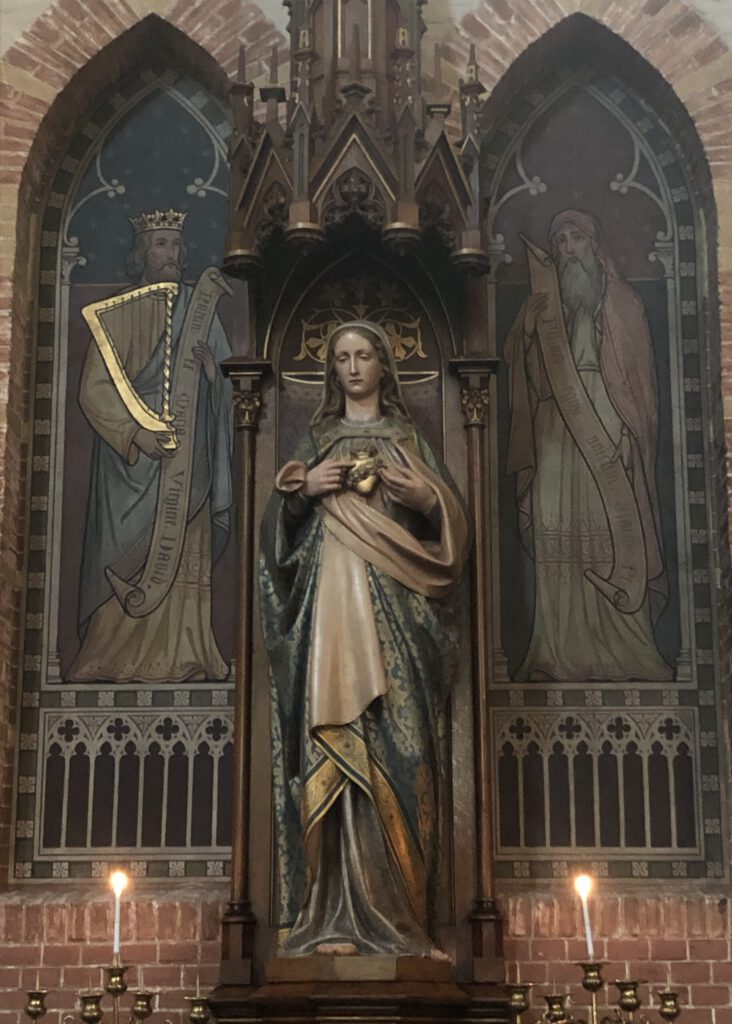
In Sneek, Friesland, stands the Catholic St. Martin's Church. This cruciform church, dedicated to Saint Martin of Tours (France), displays beautiful images of Mary.
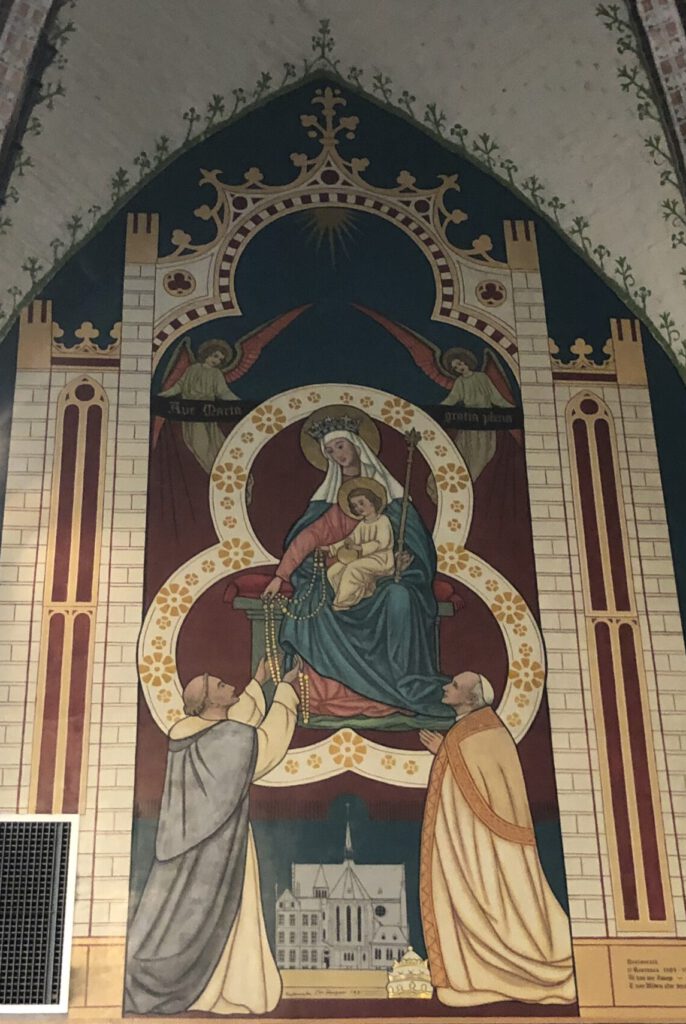
The three-aisled building was designed by architect Pierre Cuypers (1827-1921). The church was built in 1872. The large organ dates from 1891 and its maker was Michaël Maarschalkerweerd (1838-1915). The church organ was restored in 1997.
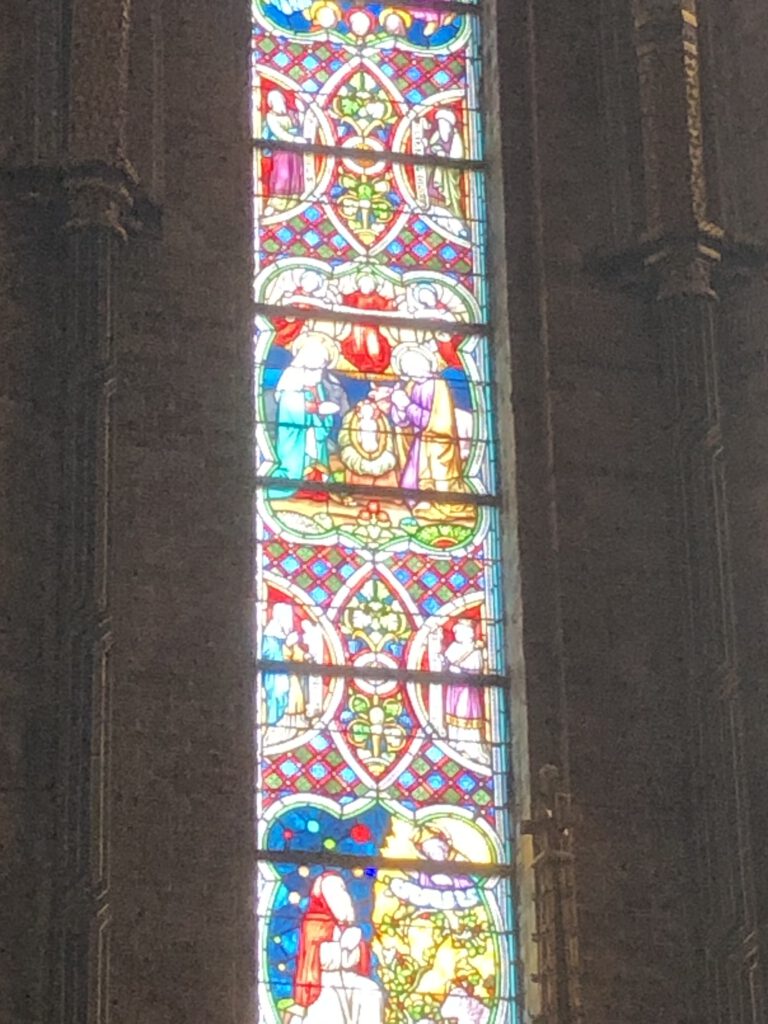
The church has several large stained-glass windows, and these were made by the F. Nicolas & Sons stained-glass studio.
The church building is a national monument and is located at Singel 62.
Posted: 6 December 2020
Last updated: 22 February 2024
~~~

 Nederlands
  English (UK)
  Deutsch
  Français